
Mold in HVAC systems is defined as fungal growth that develops inside heating, ventilation, and air conditioning components when moisture accumulates and airflow is inadequate. The industry term for this condition is “HVAC microbial contamination,” though most homeowners and technicians simply call it HVAC mold. Understanding what is mold in HVAC systems matters because your heating and cooling system moves air through every room in your home. When mold colonizes that system, it distributes spores continuously, affecting indoor air quality and triggering health problems for everyone inside. The EPA and the World Health Organization both recognize indoor mold as a significant public health concern, and your HVAC system is one of the most efficient delivery mechanisms for spreading it.
What causes mold growth in HVAC systems?
Moisture is the single prerequisite for mold growth inside any HVAC component. The EPA confirms that mold only grows indoors when moisture is present, which means eliminating moisture eliminates the problem at its source. Your HVAC system creates moisture as a natural byproduct of cooling your home, and several design and maintenance failures turn that normal moisture into a mold problem.
The four leading causes of HVAC mold are well documented:
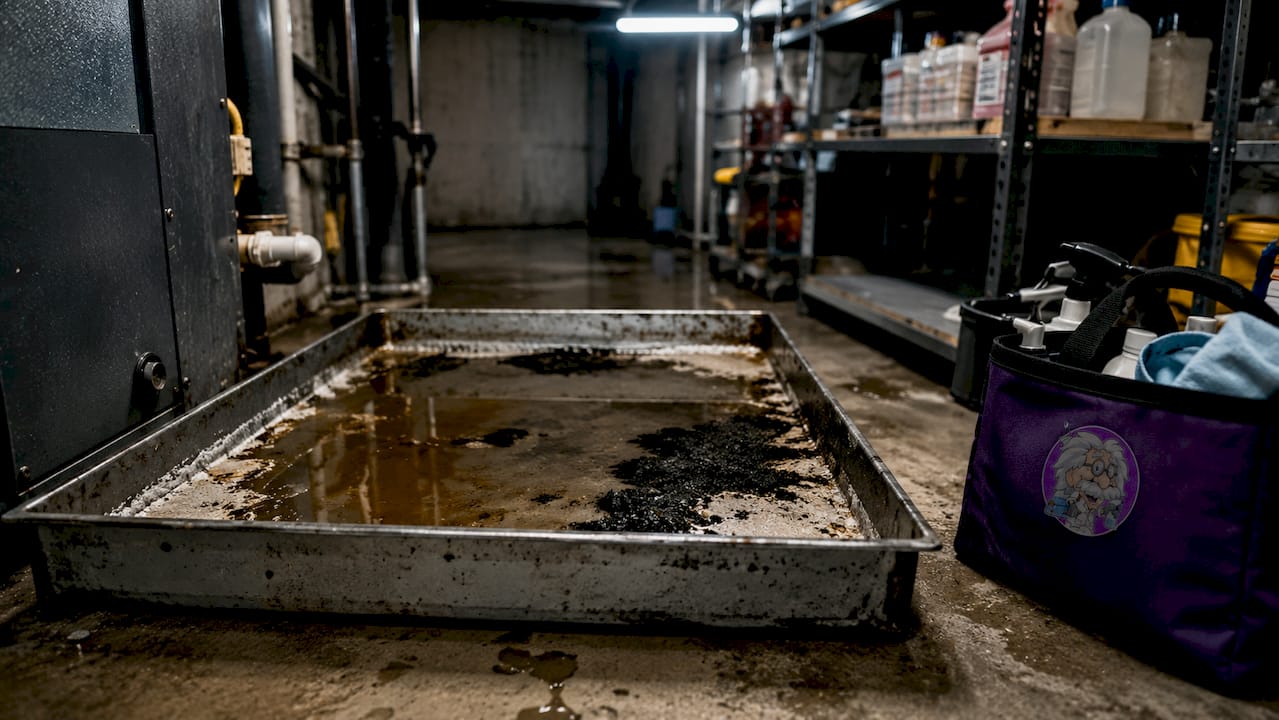
- Clogged condensate drain lines. Your air handler produces condensation every time it cools air. When the drain line clogs, water backs up into the unit and sits there, creating a wet environment that mold colonizes within 24–48 hours.
- Leaking ductwork. Gaps or cracks in ducts allow warm, humid air from unconditioned spaces like attics and crawlspaces to enter the system. That warm air hits cooler duct surfaces and condenses, feeding mold growth.
- High indoor humidity. When relative humidity stays above 60%, moisture settles on HVAC coils, filters, and duct walls. Trane’s technical guidance confirms that high humidity and clogged filters significantly increase mold risk in air handlers.
- Poor airflow and undersized systems. An HVAC unit that is too small for your home runs constantly without fully dehumidifying the air. An oversized unit short-cycles, meaning it shuts off before removing enough humidity. Both scenarios leave excess moisture behind.
Pro Tip: Check your condensate drain pan every spring before cooling season starts. If you see standing water or a dark ring around the pan, the drain line is partially blocked. A simple flush with diluted bleach clears most clogs before they become a mold problem.
Improper ventilation fan placement and bathroom moisture sources also contribute to the overall humidity load your HVAC system must manage. When bathroom fans vent into attic spaces instead of outdoors, that moisture migrates directly into areas where HVAC components often sit.
What are the signs of mold in your HVAC system?
Mold in an HVAC system announces itself through sensory and physical clues before it becomes a serious infestation. Catching these signs early saves you significant remediation cost and protects your family’s health.
The most reliable signs to watch for include:
- Musty or earthy odor when the system runs. This is the most common first sign. The smell intensifies near vents and fades when the system shuts off. If the odor disappears when you turn the HVAC off, the source is almost certainly inside the system.
- Visible dark spots or fuzzy growth on supply vents, return air grilles, or around the air handler cabinet. Mold near vents often appears as black, green, or gray discoloration.
- Worsening allergy or asthma symptoms that correlate with HVAC operation. If household members sneeze, cough, or experience eye irritation primarily when the system runs, mold spores are the likely trigger.
- Increased dust or particulate matter coming from vents, which can indicate mold colonies shedding spores into the airstream.
- Unexplained system inefficiency, such as rooms that no longer cool or heat evenly. Mold buildup on coils and filters restricts airflow and reduces system performance.
The tricky part is that mold often grows inside the air handler, on evaporator coils, or deep inside ductwork where you cannot see it without removing panels or using inspection cameras. A musty smell with no visible growth is still a strong indicator that a professional inspection is warranted. You can use a home air quality checklist to document symptoms before calling a professional.
How does HVAC mold affect health and indoor air quality?
Mold spores circulated by an HVAC system create a continuous exposure risk for everyone in the home. Harvard Health research links prolonged mold exposure to asthma, lung inflammation, and cognitive issues. These are not rare outcomes in heavily contaminated homes.
“Children in homes with indoor mold exposure develop asthma at a rate of approximately 11%, compared to 7% in mold-free homes. That gap represents a significant and preventable health burden for families.”
— Harvard Health
Children, elderly adults, and people with existing respiratory conditions face the greatest risk. But healthy adults are not immune. Repeated spore inhalation causes sensitization over time, meaning a person who had no reaction initially can develop allergic responses after months of low-level exposure.
The air quality impact extends beyond respiratory health. Mold spores reduce the effective filtration capacity of your HVAC system by clogging filters faster and coating coil surfaces. This forces the system to work harder, raises energy costs, and shortens equipment life. The CDC notes that no federal standards exist for acceptable indoor mold concentrations, which means there is no “safe” threshold to aim for. The practical goal is zero active mold growth in your system. For a deeper look at what mold exposure does to the body, the guide on mold toxicity symptoms covers the full range of health effects.
How can you remove and prevent mold in your HVAC system?
Safe mold removal from an HVAC system starts with one non-negotiable step: turn the system off. The EPA advises that running an HVAC with suspected mold spreads spores throughout the entire home. Shutting the system down before any inspection or cleaning prevents the contamination from expanding.
Prevention methods vs. remediation steps
| Action | Category | What it does |
|---|---|---|
| Replace filters every 1–3 months | Prevention | Removes spore-laden debris before it recirculates |
| Flush condensate drain lines seasonally | Prevention | Eliminates standing water that feeds mold colonies |
| Seal duct leaks with mastic or foil tape | Prevention | Blocks humid air from entering the system |
| Run a whole-home dehumidifier | Prevention | Keeps indoor humidity below 50%, starving mold of moisture |
| Professional coil cleaning | Remediation | Removes mold from evaporator coils that filters cannot reach |
| Full duct inspection and cleaning | Remediation | Clears mold colonies from inside ductwork |
| Moisture source repair | Remediation | Fixes the root cause so mold does not return |
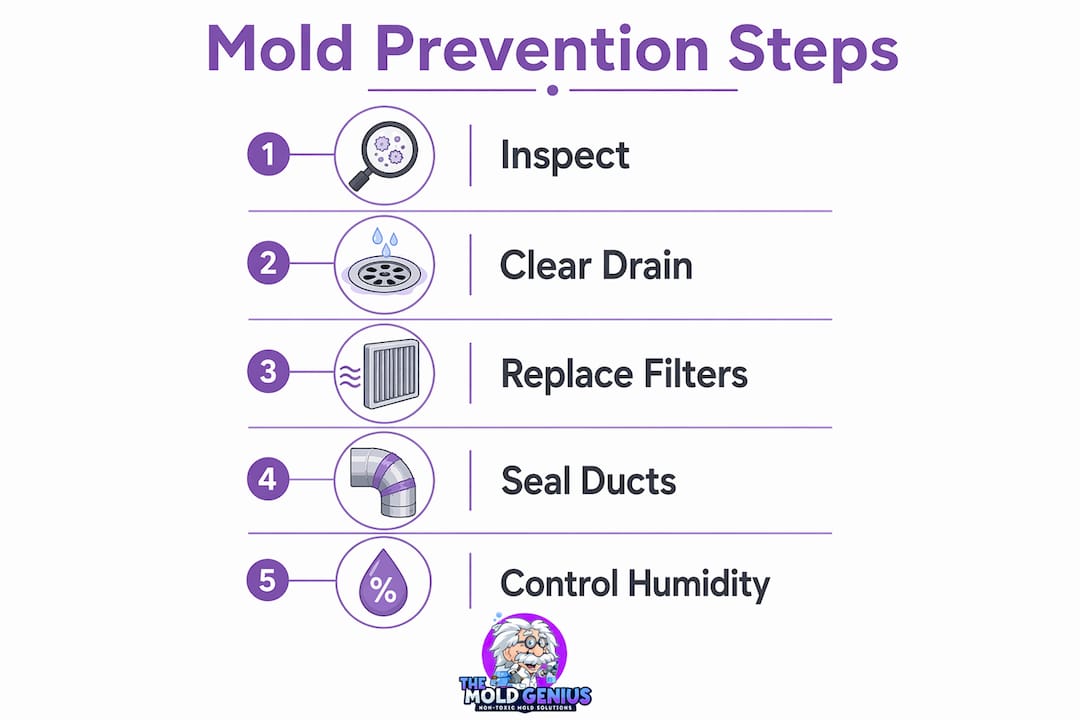
Proper HVAC maintenance, including clearing condensate lines and sealing ducts, addresses the conditions that allow mold to take hold in the first place. These are tasks most homeowners can handle on a regular schedule.
DIY cleaning with household products like bleach works on hard, non-porous surfaces. It does not work inside porous ductwork, on insulated components, or on mold that has penetrated coil fins. The EPA recommends that significant HVAC mold be professionally remediated to prevent spore spread during the cleaning process. Attempting to clean a heavily contaminated air handler without proper containment and protective equipment typically makes the problem worse by disturbing colonies and releasing spores into the air. The article on why mold remediation is not a DIY job explains the specific risks in detail.
Pro Tip: After any HVAC mold remediation, run the system with a new MERV-11 or higher filter for the first two weeks. This captures residual spores that dislodge during the initial post-treatment airflow cycles.
Humidity control is the most powerful long-term prevention tool. Keeping indoor relative humidity between 30–50% makes your HVAC components an inhospitable environment for mold. A whole-home dehumidifier integrated with your HVAC system is more effective than portable units because it treats all the air moving through the system, not just one room.
Key takeaways
Mold in HVAC systems grows wherever moisture accumulates, and controlling moisture is the only reliable way to prevent it from returning.
| Point | Details |
|---|---|
| Moisture drives all HVAC mold | Eliminate standing water and high humidity to stop mold at its source. |
| Turn off the system first | Shut down your HVAC immediately if you suspect mold to prevent spore spread. |
| Health risks are real | Children in mold-exposed homes develop asthma at nearly double the rate of those in clean homes. |
| DIY has clear limits | Surface cleaning does not reach mold inside coils, ducts, or insulated components. |
| Prevention beats remediation | Seasonal filter changes, drain flushing, and humidity control prevent most HVAC mold problems. |
What 25 years of mold work taught me about HVAC systems
Most homeowners come to us focused on the wrong thing. They want to know if it’s black mold. They want a species identification. What they actually need is a moisture map of their home.
Every HVAC mold case I’ve seen traces back to a moisture problem that was ignored or misdiagnosed. A clogged condensate line that backed up for one season. Ductwork running through an unconditioned attic with no vapor barrier. An oversized AC unit that short-cycled for years and never properly dehumidified the space. The mold is a symptom. The moisture condition is the disease.
The other mistake I see constantly is homeowners who clean visible mold off a vent cover and consider the job done. That vent cover is the last 6 inches of a system that runs through your entire house. Cleaning the cover without inspecting the air handler, coils, and ductwork is like wiping the exhaust pipe of a car with engine trouble. Harvard Health experts agree that moisture control is the priority, not chasing specific mold types. That matches exactly what we see in the field.
If your HVAC has been running with a musty smell for more than two weeks, call a professional. Not because the situation is necessarily dire, but because the longer mold colonies sit inside a system that runs 8–12 hours a day, the more thoroughly they distribute through your home. Early intervention is always cheaper and faster than waiting.
— Jim
Themoldgenius can handle your HVAC mold problem
Mold inside an HVAC system is not a problem that waits. Every hour the system runs, it moves spores through your home’s air supply.

Themoldgenius uses Pure Cloud Technology, a dry fogging system with hospital-grade hydrogen peroxide and silver ions, to reach mold inside ductwork, behind panels, and on coil surfaces that traditional cleaning cannot access. The three-phase process covers diagnosis with thermal imaging, removal with the Pure Cloud system, and prevention by fixing the moisture source. Most jobs finish in a single day with no displacement. If your HVAC system is showing signs of mold, get a free professional estimate from Themoldgenius and find out exactly what you are dealing with before it spreads further.
FAQ
What is mold in HVAC systems, exactly?
Mold in HVAC systems is fungal growth that develops inside heating and cooling components when moisture accumulates and airflow is insufficient. It most commonly appears on evaporator coils, in drain pans, on air handler surfaces, and inside ductwork.
Is mold in an HVAC system dangerous?
Yes. Mold spores circulated by an HVAC system trigger allergies, asthma, and respiratory inflammation. Harvard Health research links prolonged indoor mold exposure to lung inflammation and cognitive effects, with children at particularly elevated risk.
How do I know if my HVAC has mold?
The clearest signs are a persistent musty odor when the system runs, visible dark growth on vents or grilles, and household members experiencing worsening allergy or respiratory symptoms that improve when the system is off.
Can I remove HVAC mold myself?
Surface mold on vent covers can be wiped down, but mold inside coils, air handlers, and ductwork requires professional remediation. The EPA recommends professional treatment for significant HVAC mold to prevent spore spread during cleaning.
How do I prevent mold from growing in my HVAC system?
Replace filters every 1–3 months, flush condensate drain lines each season, seal duct leaks, and keep indoor humidity between 30–50%. These four steps address the moisture conditions that allow mold to establish inside HVAC components.