
Mold remediation in Arlington Heights, Illinois, typically costs between $1,550 and $10,350, with an average of $4,150 for the wider Chicago–Naperville–Elgin region. The price varies significantly based on the affected area's size, the materials involved (porous materials like drywall cost more), and the accessibility of the mold. Small bathroom mold remediation can start around $525, while extensive attic work may range from $5,175 to over $20,000. A firm quote requires an inspection to assess the full scope, including whether the moisture source needs repair to prevent recurrence.
Mold remediation in Arlington Heights usually costs from the high hundreds of dollars for a small bathroom area to several thousand dollars for a basement or attic, and well into five figures for whole-house work. The Chicago-area estimate we found for the Chicago–Naperville–Elgin region runs from $1,550 to $10,350, averaging $4,150. Your own number depends on the size of the area, the materials affected, access, and whether the moisture source is fixed. We don’t publish flat prices, because a firm quote only comes after someone looks at the space. This guide shows how the price is built so you can read any estimate with confidence.
What are the key takeaways about mold remediation costs in Arlington Heights?
- Regional estimates for the Chicago area run roughly $1,550 to $10,350 per job, with small bathroom jobs at the low end and attics and large areas at the high end.
- The biggest price drivers are square footage, material (drywall and insulation cost more than hard surfaces), access, and whether the water source must be repaired too.
- Insurance in Illinois generally covers mold from a sudden covered event, such as a burst pipe, and generally excludes mold from slow leaks or chronic humidity.
- Mold returns if the moisture stays, so a quote should include finding and fixing the cause, not only cleaning.
- We offer free estimates for Arlington Heights homeowners, with most jobs finished in a single day.
Table of Contents
- What mold remediation typically costs around Arlington Heights
- What drives the price of your estimate
- Cost by area of the home
- What a mold remediation estimate should include
- Why we don’t gut rooms to keep the job practical
- Will homeowners insurance pay for mold removal?
- Making sure mold doesn’t come back
- Selling or buying in Arlington Heights
- Get a firm price for your home
- FAQ
- Sources
What mold remediation typically costs around Arlington Heights
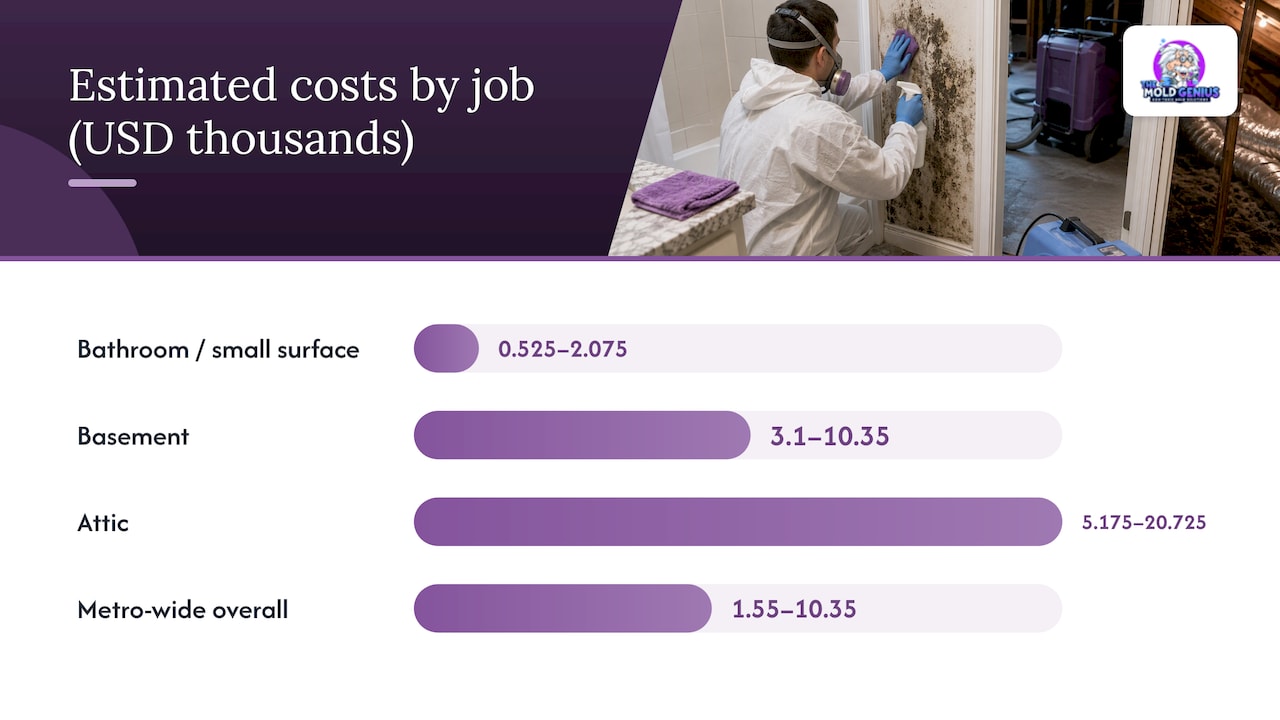
No reliable public source publishes a price list for Arlington Heights alone, so the honest starting point is the wider Chicago metro. ClearCost’s Chicago–Naperville–Elgin estimates give these examples:
| Type of job | Estimated range |
|---|---|
| Bathroom or small surface mold | $525 to $2,075 |
| Basement | $3,100 to $10,350 |
| Attic | $5,175 to $20,725 |
| Extensive, large-area work | $10,000 to $30,000 or more |
| Metro-wide overall | $1,550 to $10,350 (average $4,150) |
Treat these as ballpark figures from a cost-estimating guide, not as quotes. Two houses on the same Arlington Heights block can land at opposite ends of a range. One has a damp corner behind a vanity. The other has a roof leak that soaked attic insulation for two winters.
If you see a number far below the low end, ask what it leaves out. If a company quotes a large figure without looking at your home, ask why. A fair price follows an inspection.
What drives the price of your estimate
Size and spread of the growth
Cost scales with the area affected, but visible mold is often only part of the picture. Growth can continue behind drywall, under flooring, or above attic insulation. That is why we start with moisture detection and thermal imaging, which help find what you can’t see, before we set the scope.
The materials involved
Mold on sealed, hard surfaces is far easier to treat than mold in porous materials like drywall, carpet, and insulation. Porous materials can mean more labor, and sometimes removal and replacement. Our dry fogging approach is designed to reach mold behind walls, above insulation, and in tight corners without gutting rooms, which can keep the scope smaller.
Where the mold is
An open garage wall is simpler than a low crawlspace or a steep attic with limited access. Tight spaces take longer and need more care. That is a large reason attic estimates sit above bathroom estimates in the table above.
The moisture source
Cleaning mold without fixing the leak, condensation, or humidity problem is wasted money. The Illinois Department of Public Health says mold can return if the moisture source is not corrected, and that prevention means fixing the source and cleaning the mold. A complete estimate treats both as one job. Depending on the cause, that might include ventilation changes, insulation work, or water damage repair.
Related repairs
Remediation and rebuilding are separate line items. If wet drywall, flooring, or insulation has to come out, replacing it is its own cost. Ask whether your estimate covers only the mold treatment or the repair afterward.
Cost by area of the home
Attics
Attics grow mold because of temperature swings, poor ventilation, and warm, moist air rising from the living space. A good attic estimate looks at ventilation and insulation as well as the mold on the sheathing. That is why attic work is our most specialized service. We explain the numbers in more detail in our guide to attic mold removal cost, and if you live in the village, our page on Arlington Heights attic mold removal covers how we handle local homes.
Basements
Basements are the second most common problem we see in Chicagoland, driven by groundwater, window wells, and humidity. The Chicago area’s combined sewer system and older brick buildings create their own moisture risks, according to a Chicago remediation guide. Costs depend on how much finished space is involved. Our basement mold removal cost page breaks it down, and basement waterproofing vs. mold remediation explains which problem you actually have.
Bathrooms
Bathroom jobs are usually the smallest: grout, ceiling corners, fan housings, and the wall behind a tub or vanity. If the cause is a failed exhaust fan or a slow plumbing leak, the fix to the source can cost more than the cleaning itself.
Crawlspaces and garages
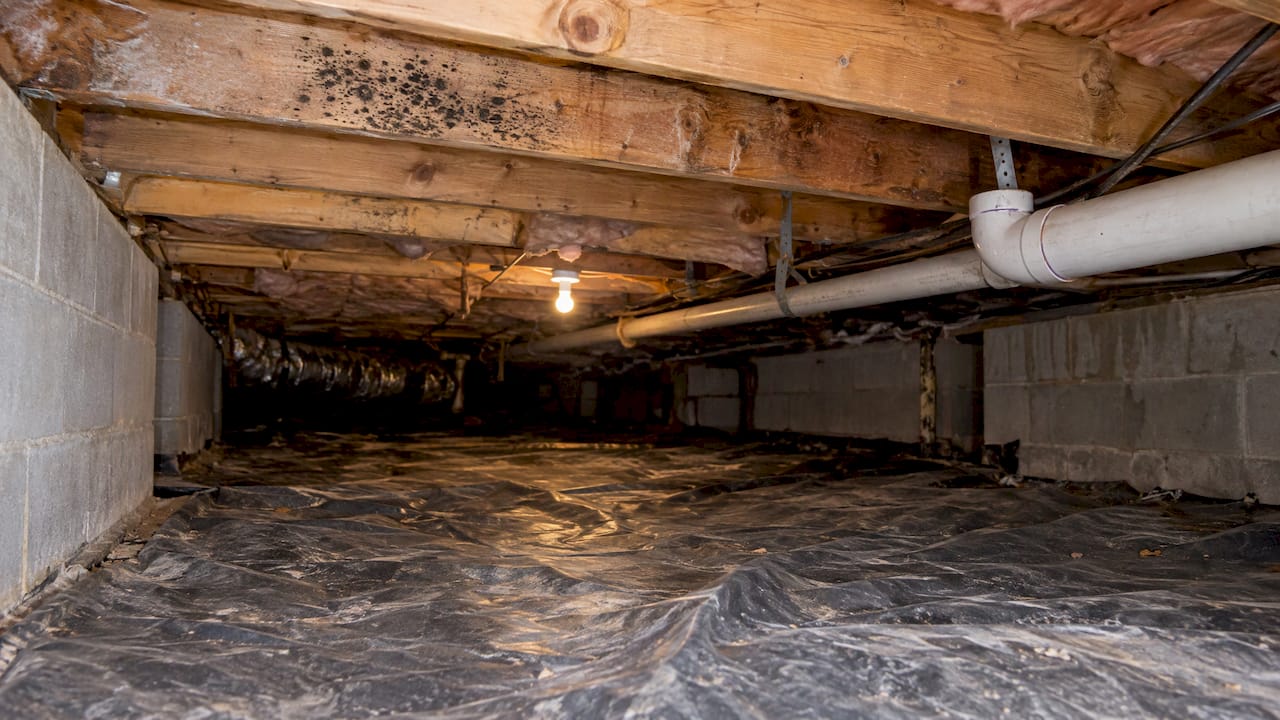
Crawlspaces collect humidity and are hard to reach. Garages often show mold on drywall near the door, where moisture and temperature swings meet. Both need the moisture path identified. See how we approach crawlspace mold treatment and garage mold remediation.
What a mold remediation estimate should include
When you compare quotes, look for the same items in each one. A clear estimate lists:
- Inspection and diagnosis. How the company finds the mold and the moisture behind it, such as moisture meters and thermal imaging.
- Scope in writing. Which rooms, which surfaces, and the approximate square footage.
- Containment and treatment method. How the work is separated from the rest of the house and what is applied. Our Pure Cloud system is a dry fog made with hospital-grade hydrogen peroxide and silver ions.
- Removal of damaged materials. Whether anything must be cut out, and if so, what.
- Moisture correction. What will be done about the source, or who will do it.
- Prevention steps. Ventilation, dehumidification, insulation, or drainage recommendations.
- Guarantee and timeline. How long the work takes and what happens if mold returns.
The procedure for opening, drying and cleaning affected drywall is covered in this drywall mold remediation guide, which is a useful picture of what that line item involves.
What may cost extra
Things that can add to a quote after the first look:
- Rebuilding or replacing drywall, flooring, trim, or insulation.
- Plumbing, roof, or gutter repairs to stop the water.
- Extra inspection or testing. The IDPH does not recommend routine mold testing when mold is visible or there is a musty odor. In those cases the priority is fixing the moisture and cleaning the mold.
- Hard-to-reach areas that need extra time.
Why we don’t gut rooms to keep the job practical
Most homeowners expect remediation to mean torn-out walls, plastic sheeting, and days away from home. That is how traditional work often goes, and it drives cost up fast.
We built our process around Pure Cloud Technology for that reason. The dry fog uses hospital-grade hydrogen peroxide and silver ions and is designed to reach mold behind walls, above insulation, and in tight corners, so we can avoid demolition where it isn’t needed. Most jobs wrap up in a single day and families can return that same day.
The price people remember is not the cleaning. It is the second job, when mold comes back because nobody found the leak. So we work in three phases: diagnose with moisture detection and thermal imaging, remove with Pure Cloud, and prevent by fixing the root cause. We stand behind that work with a 100% guarantee, and we like to be judged by our 400+ Google reviews.
When you call us, expect a free estimate that tells you what we found, what we recommend, and why.
Alex
Will homeowners insurance pay for mold removal?
It depends on the cause. According to an Illinois insurance law firm, mold that results from a sudden, covered event, such as a burst pipe, may be covered. Mold from gradual neglect, slow leaks, or chronic humidity is typically excluded.
A few practical steps:
- Stop the water and photograph the damage before anything is cleaned or removed.
- Report the loss promptly and read your policy’s mold and water damage language.
- Get a written scope from the remediation company that documents the source and the affected areas.
We work with insurers including Allstate, State Farm, USAA, Farmers, and Liberty Mutual, among others, and we can supply the documentation a claim usually needs. Your policy and adjuster make the final coverage decision.
Making sure mold doesn’t come back
Prevention is part of the real cost of remediation, because a repeat job costs more than a prevented one. After treatment:
- Keep indoor humidity under control and run bath and kitchen fans.
- Fix roof, window, and plumbing leaks quickly.
- Check attic ventilation and insulation, which is why we offer attic insulation services alongside mold work.
- Walk through our post-remediation mold prevention checklist each season.
Selling or buying in Arlington Heights
If mold turns up during an inspection, you don’t have to lose the sale. We run a realtor network program for agents who need mold resolved before closing, and our guide on handling mold when selling an Illinois home walks through the steps and paperwork.
Get a firm price for your home
Ranges help you plan. A visit gives you the real number. We offer free estimates across Arlington Heights and the surrounding suburbs, and we tell you plainly what we found and what needs to happen.

See how our Arlington Heights mold removal services work, or go to The Mold Genius to request your free estimate. If water damage caused the problem, our water damage repair and restoration service can handle both in one project.
FAQ
How much does mold remediation cost in Arlington Heights?
For the wider Chicago area, estimates run from about $1,550 to $10,350, with an average near $4,150. Small bathroom jobs sit at the low end, while basements, attics, and large areas cost more. Your exact price depends on the size, materials, access, and moisture source. We give free estimates so you get a number for your home.
Does the price change by neighborhood or suburb?
The work itself costs about the same across Chicagoland suburbs. What changes the price is the house: age, construction, the space affected, and what caused the moisture. Neighboring towns such as Hoffman Estates and Wheaton have their own cost guides if you want to compare, like our Hoffman Estates mold remediation cost guide.
Can mold grow back after remediation?
Yes, if the moisture source is not fixed. The IDPH says prevention requires fixing the source and cleaning the mold. That is why our process ends with a prevention phase focused on the root cause.
Will homeowners insurance pay for mold removal?
Often only when the mold follows a sudden, covered event like a burst pipe. Illinois policies generally exclude mold from slow leaks or long-term humidity. Check your policy, and we can help document the damage for your claim.
How long does the work take?
Most of our jobs finish in a single day, and homeowners can return the same day. Larger jobs, or those that need repairs to the water source, can take longer. We confirm the timeline in your estimate.
Sources
- Mold Remediation Cost in Chicago-Naperville-Elgin, IL (ClearCost)
- Reducing Your Exposure to Mold (Illinois Department of Public Health)
- Does Homeowners Insurance Cover Mold? What Illinois Policyholders Need to Know
- Mold Remediation Chicago: A Homeowner’s Guide