
Most homeowners think of mold as a surface problem. You see a dark spot, you clean it, you move on. But how mold affects air quality is a different story entirely. Mold spores are microscopic, they travel invisibly through the air you breathe every day, and they can trigger real health consequences long before you notice any visible growth. If you or someone in your home deals with unexplained allergies, persistent coughing, or worsening asthma, the air inside your house may be the culprit. This guide breaks down exactly what is happening and what you can do about it.
Table of Contents
- Key Takeaways
- How mold affects indoor air quality
- Health effects of breathing mold spores
- What the data says about mold and air contamination
- Detecting and reducing mold exposure indoors
- Why mold remediation actually improves your health
- My honest take after years of seeing this up close
- Ready to stop guessing about your air quality?
- FAQ
Key Takeaways
| Point | Details |
|---|---|
| Spores spread fast | Mold spores become airborne within seconds of disturbance and circulate through your entire home via HVAC. |
| Health risk is real | About 10% of people are severely allergic to mold, and even non-allergic individuals can develop symptoms. |
| Humidity is the trigger | Keeping indoor humidity below 60% is the single most effective way to stop mold from growing. |
| Surface fixes fail | Painting over mold traps toxins behind walls and worsens air contamination rather than solving it. |
| Remediation works | Professional mold removal programs have demonstrated a measurable reduction in asthma-related emergency visits. |
How mold affects indoor air quality
To understand how mold affects indoor air quality, you first need to understand what mold actually is. Mold is a type of fungus. It reproduces by releasing spores, which are microscopic particles small enough to float in air and pass straight through your respiratory tract into your lungs. The technical term for the broader issue is indoor biological air pollution, and mold is one of its primary drivers.
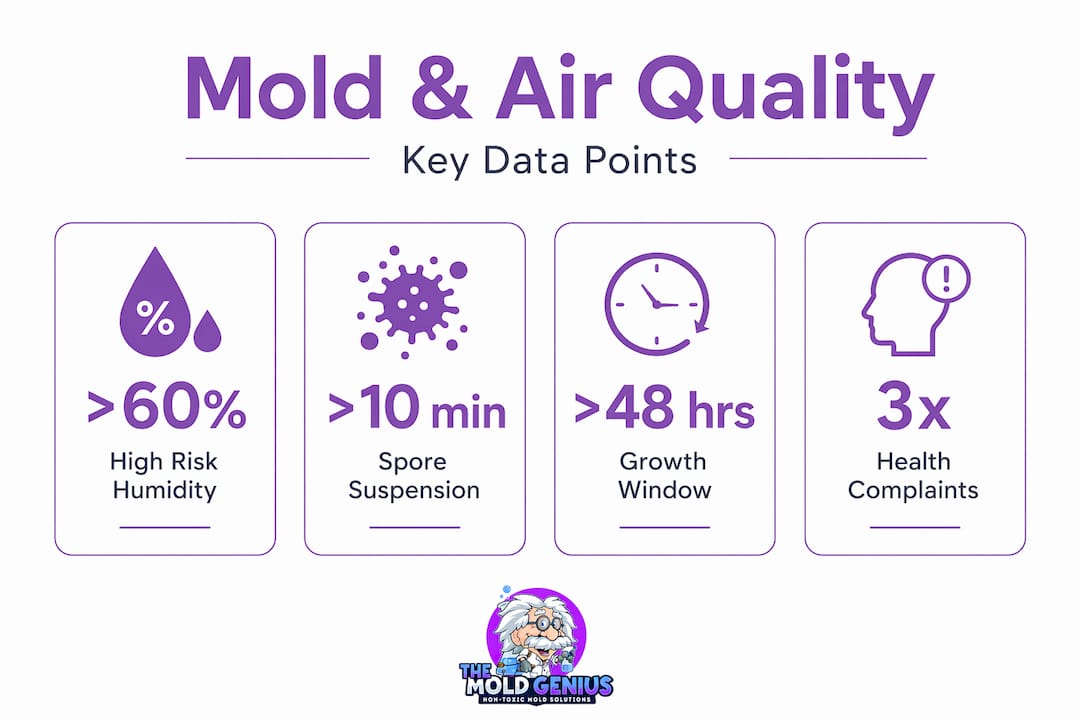
Mold spores are everywhere, indoors and outdoors. The problem starts when spores land on a damp surface inside your home and begin to grow. Once a mold colony establishes itself, it continuously releases new spores into the air around it. What makes this dangerous is how fast it happens. Mold spores become airborne in as little as 0.18 seconds when disturbed, and between 30 and 85 percent of those particles stay suspended for over 10 minutes.
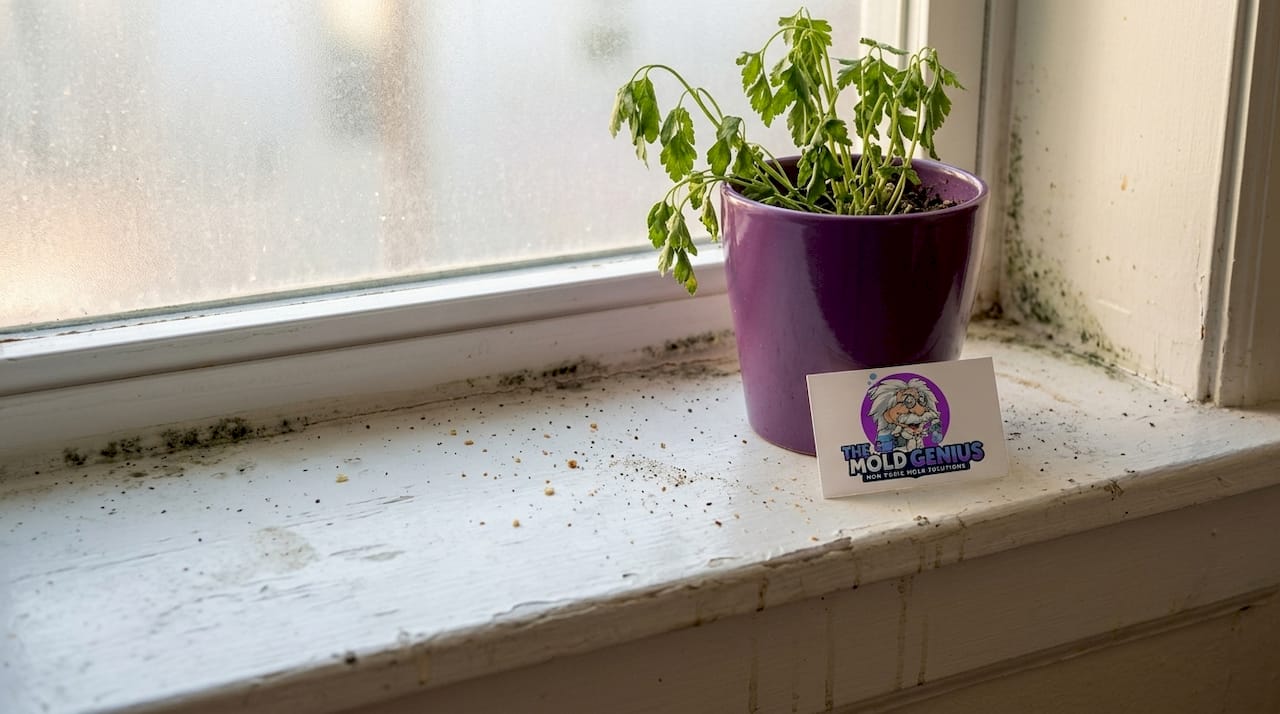
That suspension time is what turns a localized mold patch in your bathroom into an air quality problem throughout your entire house. Your HVAC system does not filter mold spores efficiently. It circulates them. A colony growing inside one air duct can distribute spores to every room connected to that system.
Different mold species also behave differently. Some, like Cladosporium, produce spores that are easily disturbed and repeatedly become airborne, which increases the chance of inhalation. Others, like Stachybotrys chartarum (commonly called black mold), produce fewer airborne spores but release mycotoxins that are more potent in small quantities.
- Aspergillus: Common in damp walls and HVAC systems; associated with respiratory infections in immune-compromised individuals
- Penicillium: Found in water-damaged materials; a leading cause of indoor mold allergy symptoms
- Cladosporium: Extremely common, high airborne presence; major allergy trigger year-round
- Stachybotrys: Requires significant ongoing moisture; produces mycotoxins linked to more severe health reactions
Pro Tip: If you notice a musty smell in a room but no visible mold, do not assume the problem is minor. That odor is produced by microbial volatile organic compounds (mVOCs), which are chemical byproducts of active mold growth. The source is likely hidden inside a wall, beneath flooring, or above ceiling tiles.
Health effects of breathing mold spores
The health story behind mold and indoor air quality is more layered than most people realize. About 10% of the population is severely allergic to mold, experiencing symptoms that include nasal congestion, watery eyes, persistent coughing, and skin irritation. But you do not need a diagnosed mold allergy to feel the effects.
For people with asthma, mold spores are a well-documented trigger for attacks. Airborne spores cause the airways to become inflamed and constricted, which can send someone to the emergency room even if their asthma was previously well-controlled. Children and the elderly face a higher risk because their immune systems are either still developing or less capable of handling repeated inflammatory challenges.
Chronic mold exposure does not always look like a dramatic allergic reaction. Ongoing nasal congestion from mold can force people to breathe through their mouths at night, which leads to throat irritation, dry mouth, and disrupted sleep. Many people treat the sleep problem without ever identifying the mold as the root cause.
The distinction between allergenic molds and toxigenic molds matters when you talk about how mold impacts health at a deeper level. Most common household molds fall into the allergenic category. They irritate. They inflame. They make existing conditions worse. Toxigenic molds produce mycotoxins that can cause neurological symptoms, immune suppression, and more serious lung damage with prolonged exposure. Both categories affect indoor air quality in ways that are not visible to the naked eye.
Here is a summary of the most common health symptoms linked to mold exposure indoors:
- Nasal and sinus congestion
- Sneezing and runny nose
- Coughing or wheezing
- Eye redness and tearing
- Skin rashes or itching
- Shortness of breath or chest tightness
- Fatigue and headaches with prolonged exposure
What the data says about mold and air contamination
The science on how mold affects air quality quantitatively is worth paying attention to. Mold spores can remain suspended for minutes to hours indoors, which means even a small colony can create a continuous stream of biological particles circulating through your living space.
The most critical environmental factor is humidity. Indoor relative humidity above 60%, sustained for more than 48 hours, provides the conditions mold needs to germinate and establish a colony. Below that threshold, most mold species cannot get a foothold. This is why basements, bathrooms, and attics are the most common problem zones. They are the spaces where moisture builds up and goes unnoticed the longest.
Renovation and cleaning activities can make things dramatically worse if not handled carefully. Here is how common mold species compare in terms of their air quality impact:
| Mold species | Moisture requirement | Airborne spore level | Primary health risk |
|---|---|---|---|
| Cladosporium | Low to moderate | Very high | Allergies, asthma triggers |
| Aspergillus | Moderate | High | Respiratory infections |
| Penicillium | Moderate | High | Allergic reactions |
| Stachybotrys | Very high (sustained) | Low | Mycotoxin exposure |
Renovation work is a particularly high-risk moment. Cutting into a wall that contains hidden mold releases a concentrated burst of spores into the air. Without proper containment and filtration, those particles spread throughout the home instantly. This is one reason why professional assessment before any demo work is worth the upfront cost.
Pro Tip: Before running a dehumidifier to fight mold, find and fix the moisture source first. A dehumidifier running in a space with an active leak or vapor intrusion is just working overtime without solving the problem. Address the source, then manage residual humidity.
Detecting and reducing mold exposure indoors
Reducing mold exposure indoors starts with recognizing that visible mold is only part of the picture. The signs you should take seriously include a persistent musty odor in any room, unexplained respiratory symptoms that improve when you leave the house, water stains on walls or ceilings, and condensation forming regularly on windows or pipes.
Here is a practical sequence for tackling the problem:
- Control humidity first. Get an inexpensive hygrometer and check humidity levels in problem areas. Keep readings consistently below 60%. Target 45 to 55 percent if someone in the home has asthma or allergies.
- Fix moisture intrusions. Any plumbing leak, roof leak, or foundation seepage needs to be addressed before mold remediation can hold. Removing visible mold without fixing the moisture source results in rapid regrowth.
- Get professional testing. Professional mold testing includes visual inspection, air and surface sampling, moisture mapping, and lab analysis. This tells you exactly what species you are dealing with and how far contamination has spread.
- Hire qualified remediation. For anything beyond a small, isolated surface patch, professional remediation is the right call. DIY cleaning with bleach does not address spores embedded in porous materials and can disturb colonies in ways that temporarily spike spore counts.
- Improve ventilation. Exhaust fans in bathrooms and kitchens, properly vented attic spaces, and clean HVAC filters all reduce the conditions mold needs to thrive.
One mistake that homeowners make far too often is painting over mold to hide it. Painting over mold does not kill it. It traps mycotoxins and biological material behind the surface, where they continue to affect air quality without any visible indication that a problem exists.
- Use a HEPA-filter vacuum in mold-affected areas rather than a standard vacuum, which can redistribute spores into the air
- Replace HVAC filters every 60 to 90 days if you have known mold issues
- Consider an air purifier with a true HEPA filter for bedrooms and living areas during remediation
Why mold remediation actually improves your health
The evidence that proper mold removal improves air quality and health outcomes is not just anecdotal. New York City’s Mold Busters program offers one of the most documented examples at scale. The program targeted public housing units with significant mold problems, combining professional mold removal with ventilation upgrades to address air circulation deficiencies. The results were measurable and significant.
The NYC Mold Busters program produced a 25% reduction in asthma-related emergency visits, translating to nearly 2,800 fewer annual emergency department visits. Residents experienced 9 fewer asthma-related ED visits per 1,000 people compared to control areas.
That is not a marginal improvement. It is a direct, quantifiable connection between fixing the mold in a building and reducing the medical burden on the people living there. The program also demonstrated that the combination of mold removal and ventilation improvement creates a compounding benefit. Better airflow prevents new mold growth while removal addresses the existing contamination.
For homeowners, the takeaway is straightforward. Mold remediation is not cosmetic work. It is a health intervention. The financial and health value of addressing mold early, before it spreads and before symptoms become chronic, is far greater than waiting until the problem becomes impossible to ignore.
My honest take after years of seeing this up close
I have been in hundreds of homes where the homeowner had been living with symptoms for months, sometimes years, before anyone connected those symptoms to mold. Persistent headaches written off as stress. Kids with chronic sinus infections treated with repeated rounds of antibiotics. Adults with asthma that “just got worse” after moving to a new home.
What I have learned is that visible mold is almost never the whole story. When you can see it on a wall, there is usually far more growing behind that wall, in the insulation above it, or in the crawlspace below the floor. The air in that home has been contaminated long before anyone noticed the spot on the drywall.
I have also seen how quickly things improve after proper remediation. People sleep better. Kids stop coughing. Adults who were managing asthma with daily medication find their symptoms ease up within weeks. The connection between clean air and how you feel every day is more direct than most people expect.
The hardest conversation I have with homeowners is about surface fixes. Bleach does not solve this. Paint does not solve this. Humidity control without removing existing colonies does not solve this. The only thing that actually works is finding every affected area, treating it thoroughly, and eliminating the moisture that made it possible in the first place. Do that, and the air quality improvement follows.
— Jim
Ready to stop guessing about your air quality?
If anything in this article sounds familiar, your home’s air may be telling you something worth listening to. Themoldgenius specializes in exactly this kind of situation: homes where the mold is real, the symptoms are real, and the need for a real solution is overdue.

Their process starts with a thorough diagnosis using moisture detection and thermal imaging to find mold that no visual inspection can catch. Then their Pure Cloud Technology treats every affected area, including behind walls, above insulation, and inside tight spaces, using hospital-grade hydrogen peroxide and silver ions. Most jobs are completed in a single day with no displacement. Whether the problem is in your basement, your attic, or somewhere you have not found yet, Themoldgenius offers free estimates and works with most major insurance providers. Start with a professional mold assessment and get a clear picture of what you are actually breathing.
FAQ
What are the most common symptoms of mold exposure?
Common mold allergy symptoms include nasal congestion, coughing, watery eyes, skin irritation, and wheezing. People with asthma may experience more severe reactions including full attacks triggered by airborne spores.
How fast do mold spores spread through a home?
Mold spores become airborne in under a second when disturbed and can remain suspended for over 10 minutes, circulating through HVAC systems to reach every room in the house.
Does humidity really control mold growth?
Yes. Indoor humidity sustained above 60% for more than 48 hours creates the conditions mold needs to germinate. Keeping humidity consistently below that threshold is one of the most effective preventive measures.
Can mold affect air quality even if I cannot see it?
Absolutely. Mold growing inside walls, above ceiling tiles, or in HVAC ducts continuously releases spores into your air without any visible indication. A musty smell or unexplained symptoms are often the first signs.
Is professional mold removal actually better than doing it yourself?
For anything beyond a small, isolated surface patch, yes. Professional testing identifies species and contamination extent, while professional remediation addresses hidden mold and fixes the moisture source to prevent regrowth.