
Mold is one of those problems that feels like it should be simple to fix. You see it, you clean it, it’s gone. But that’s not how mold works, and homeowners learn this the hard way when it comes back weeks later in the exact same spot. Understanding how remediation prevents future mold means understanding that the visible growth is never the real problem. Moisture is. When professional remediation addresses both the existing mold and the conditions that allowed it to grow, you break the cycle for good. This guide walks you through exactly how that works.
Table of Contents
- Key takeaways
- How remediation prevents future mold from returning
- What real mold remediation actually involves
- Moisture and humidity control after remediation
- Mistakes that make mold come back
- Building a mold-resistant home for the long term
- My honest take after 25 years of this work
- Let Themoldgenius help you break the mold cycle
- FAQ
Key takeaways
| Point | Details |
|---|---|
| Moisture is the root cause | Removing mold without fixing the moisture source guarantees regrowth within weeks. |
| Professional removal goes deep | Proper remediation finds hidden mold behind walls and under floors using thermal imaging. |
| Humidity targets matter | Keeping indoor humidity between 30% and 50% is your most reliable long-term defense. |
| Common mistakes cause recurrence | Rushing reconstruction, venting fans into attics, and skipping HVAC cleaning all invite mold back. |
| Prevention is a two-part job | Remediation handles today’s mold; your habits and maintenance handle tomorrow’s. |
How remediation prevents future mold from returning
Most people think of mold as a surface problem. Scrub the black spots off the bathroom tile, spray some bleach, call it done. The reason that approach always fails comes down to biology. Mold reproduces through spores, microscopic particles that float freely through your home’s air at all times. Spores are everywhere, always. They only become a problem when they land somewhere with enough moisture, warmth, and organic material to start colonizing.
The growth requirements are straightforward:
- Moisture is the non-negotiable trigger. Without it, spores stay dormant.
- Temperature between roughly 40°F and 100°F allows mold to thrive, which describes most of your home.
- Organic material like wood, drywall paper, and insulation gives mold something to eat.
Here’s what that means practically. Mold spores colonize within 24 to 48 hours after a water event. That’s not a lot of time to respond. If you clean the surface but leave the damp drywall behind, or the slow pipe drip in the wall cavity, you haven’t solved anything. The spores are still there, conditions are still right, and the colony rebuilds.
Controlling humidity and eliminating damp conditions is what actually stops mold from returning. Remediation removes the colony that already exists. Moisture control prevents the next one from ever forming. These two things work together, and neither one is enough without the other.
What real mold remediation actually involves
There’s a meaningful gap between cleaning mold and remediating it. A lot of homeowners don’t know what professional remediation actually looks like, which makes it hard to know whether the job was done right.
A thorough remediation process follows these steps:
- Assessment and detection. Professionals use moisture meters and thermal imaging to find mold that isn’t visible. Mold living inside wall cavities or above ceiling tiles doesn’t show up until the damage is severe.
- Containment. The affected area gets sealed with plastic sheeting and negative air pressure to prevent spores from spreading to clean parts of the home during removal.
- HEPA air filtration. Air scrubbers with HEPA filters run continuously throughout the job. Household vacuums spread mold spores rather than capture them. Only HEPA filtration catches particles down to 0.3 microns.
- Physical removal. Contaminated porous materials like drywall, insulation, and wood framing get removed and disposed of. Per ANSI/IICRC S520-2024 standards, physical removal is required. Biocides and encapsulants alone don’t meet the standard.
- Antimicrobial treatment and HEPA vacuuming. After the material is removed, surfaces get treated and HEPA vacuumed with antimicrobial wiping to capture residual spores and mycotoxins.
- Post-remediation verification. Air sampling confirms that mold levels have returned to normal background concentrations. This is your proof the job actually worked.
Pro Tip: Ask any remediation company whether they follow ANSI/IICRC S520-2024 standards. If they don’t know what that is, or if their plan involves painting over the mold, walk away.
One shortcut that damages more homes than people realize: painting over mold or encapsulating it without removal. It hides the problem cosmetically while the colony continues growing behind the surface. By the time it reappears, the structural damage is far worse than if the work had been done correctly the first time.
Moisture and humidity control after remediation
Getting the mold out professionally is only half the job. The other half belongs to you. Once your home is remediated, what you do next determines whether the mold stays gone.
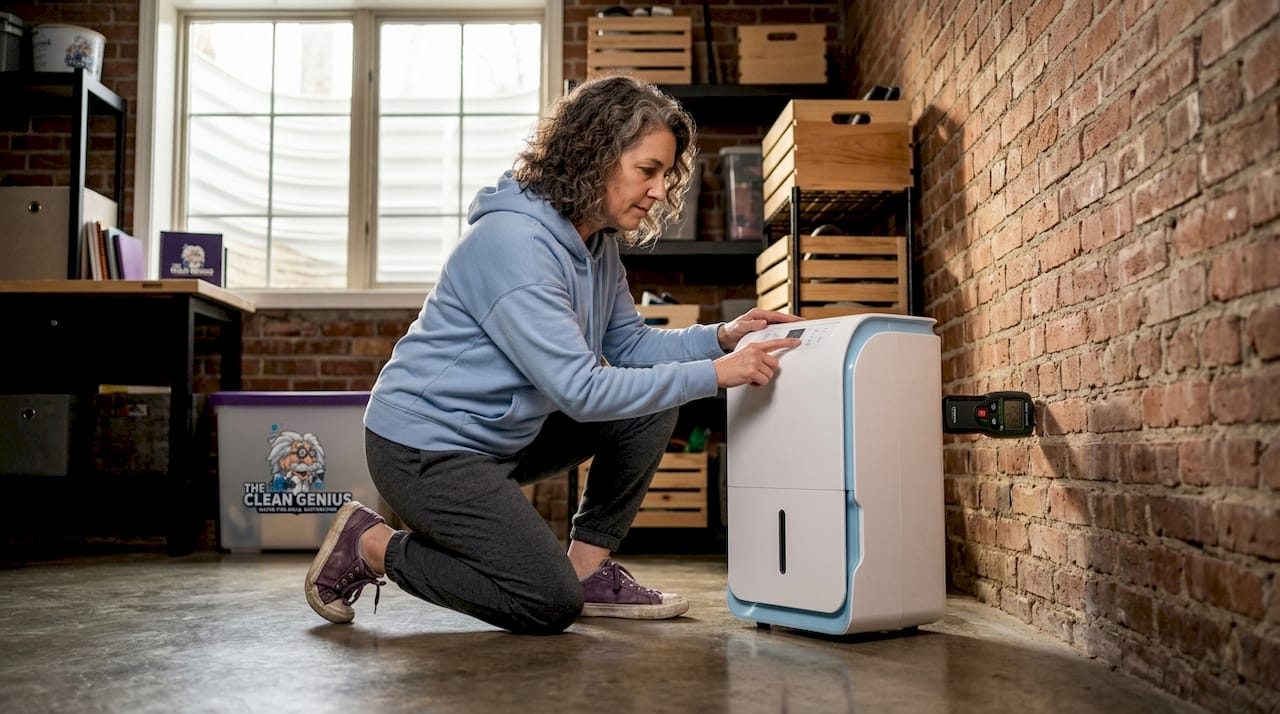
The core target is keeping your indoor relative humidity between 30% and 50%. Mold risk rises sharply above 60% humidity, and most homes in humid climates or with basement moisture issues regularly exceed that without the homeowner knowing. A simple digital hygrometer costs under $20 and gives you a real-time read on conditions in any room.
Here’s what a solid ongoing moisture control plan looks like:
- Run dehumidifiers in basements, crawlspaces, and any room that trends damp. Set them to maintain that 30% to 50% range.
- Use bathroom exhaust fans properly. Run the fan during showers and for at least 30 minutes after. Proper exhaust fan use reduces bathroom moisture by up to 75%, which is significant in a room that generates that much steam daily.
- Check exhaust fan discharge. The fan must vent outdoors, not into the attic or crawlspace. Fans venting into confined spaces dump warm, humid air somewhere it can’t escape, creating exactly the conditions mold loves.
- Inspect and repair leaks immediately. Under sinks, around the base of toilets, at window frames, and along roof penetrations. Small drips create large mold problems over weeks.
- Maintain your HVAC system. Change filters on schedule. Have ducts inspected if you’ve had any moisture event, because contaminated fiberglass duct liners can harbor mold and distribute spores throughout the house every time the system runs.
Pro Tip: After any water damage event, contact a professional within 24 hours. The 24 to 48 hour window before mold colonization is tight, and getting water damage addressed quickly is the difference between a drying job and a remediation job.
Mistakes that make mold come back
Even after a professionally done remediation, homeowners make choices that undo the work. These are the most common ones.
- Rebuilding too fast. Reconstruction before materials are fully dry is one of the most frequent causes of hidden mold. Wet framing or damp subfloor gets closed behind new drywall, and the colony builds in the dark for months before it shows up again. Wet materials must be dry within 24 to 48 hours before any enclosure work begins.
- Venting exhaust fans into the attic. This one is extremely common in older homes. The contractor who installed the fan years ago took a shortcut, and warm moist air has been loading the attic with humidity ever since. Attics are already vulnerable spaces due to temperature swings and poor airflow.
- Ignoring small leaks. A slow drip under the kitchen sink or a weeping pipe connection in the basement might not look alarming. Left alone for a few weeks, it generates enough sustained moisture to start a new colony. Small leaks deserve immediate attention, not a mental note to deal with later.
- Skipping HVAC filter changes. A clogged filter reduces airflow, increases humidity retention, and can become a mold source itself. If your system runs with a contaminated filter after remediation, you’re recirculating spores through the whole house.
- Over-relying on ventilation alone. In humid climates, opening windows adds moisture rather than removes it. Ventilation works in dry conditions. In a Chicago summer or any region with high ambient humidity, dehumidification is the real tool.
Building a mold-resistant home for the long term
Remediation clears the current problem. Sustained prevention requires a different mindset, and homeowners who make a few targeted changes to how they maintain their home rarely deal with mold twice.
The core principle is simple: mold remediation alone does not cure the problem without moisture management. Every dollar spent on remediation buys you a clean slate. What you do with that clean slate is up to you.
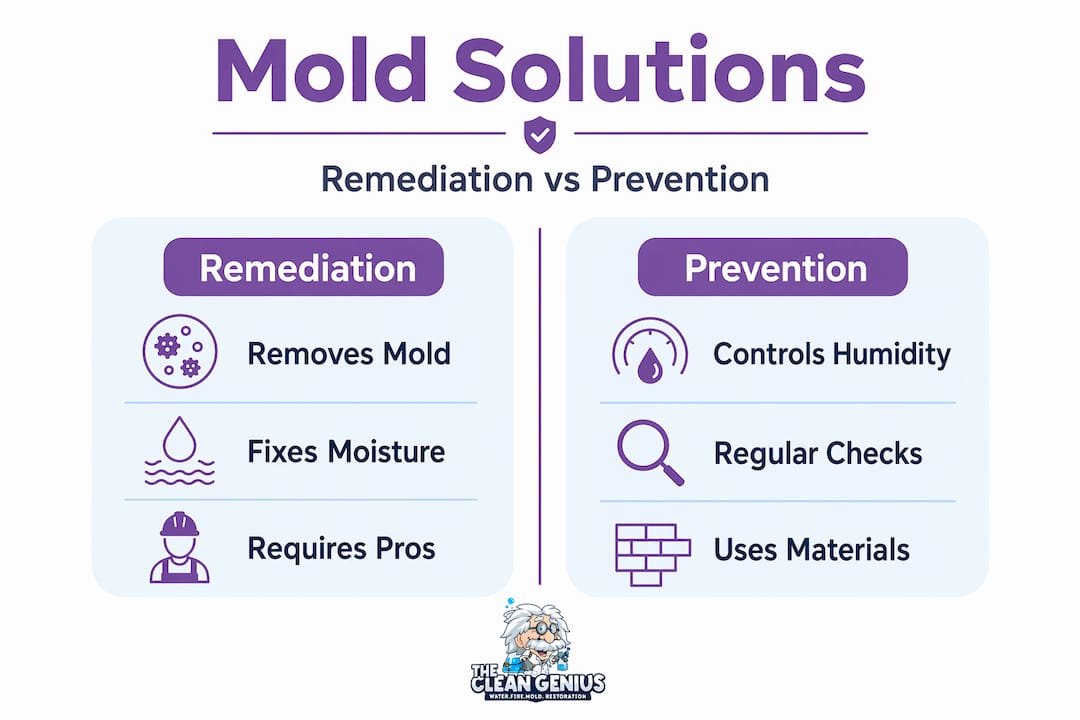
Here’s how remediation and ongoing prevention stack up:
| Strategy | Remediation | Ongoing prevention |
|---|---|---|
| Removes existing mold colonies | Yes | No |
| Addresses moisture source | Partially | Yes, ongoing |
| Protects structural materials | Yes, immediate | Yes, long-term |
| Requires professional involvement | Yes | Periodic check-ins |
| Maintains healthy air quality | After job | Through daily habits |
Beyond humidity control, consider mold-resistant building materials when you’re replacing drywall or finishing a basement. Paperless drywall, mold-resistant primer, and moisture-barrier paint don’t give mold the organic material it needs to eat. These aren’t expensive upgrades. They’re smart ones that reduce your risk significantly over time.
Regular professional inspections, especially in problem areas like attics, crawlspaces, and basements, catch moisture issues before they become mold issues. Explore more on this at the Themoldgenius mold prevention blog, where location-specific guidance for Chicagoland homes is covered in depth.
My honest take after 25 years of this work
I’ve walked into hundreds of homes where the homeowner had already dealt with mold before. They paid someone to clean it up, maybe more than once, and here it was again. The frustration is real, and I understand it completely.
What I’ve learned is that the repeat cases almost always share one thing in common. The moisture was never actually fixed. Maybe the remediation was done well, but no one checked whether the bathroom fan was venting into the attic. Or the dehumidifier in the basement sat empty because the homeowner didn’t realize it needed to be emptied or drained. Small gaps, big consequences.
The other thing I’ve seen consistently is that homeowners who understand why mold comes back are the ones who stop the cycle. Once you know that spores are always present and moisture is the only variable you actually control, everything changes. You stop treating mold as bad luck and start treating it as a maintenance problem you can manage.
My honest advice: don’t skip the post-remediation assessment. Air sampling after the job tells you whether the work actually cleared the air, not just the walls. And find a company that tells you what caused the mold, not just what they did to remove it. If they leave without explaining the root cause, the problem isn’t over.
— Jim
Let Themoldgenius help you break the mold cycle
If you’re dealing with mold right now, or worried it might be hiding somewhere you can’t see, Themoldgenius is worth a call. As a family-owned company serving the Chicagoland area with 25-plus years of combined experience, they specialize in finding mold where it actually lives, not just where it’s visible.

Their three-phase process covers diagnosis with thermal imaging, removal using Pure Cloud Technology (a hospital-grade dry fogging system that reaches behind walls and above insulation without tearing your home apart), and prevention by fixing the root moisture cause. Most jobs finish in a single day and homeowners return the same day.
Whether it’s basement mold removal, attic remediation, or full mold removal and remediation services, they offer free estimates and work directly with major insurance carriers including Allstate, State Farm, and USAA. Getting a professional set of eyes on your home costs nothing upfront and could save you from dealing with this problem again.
FAQ
Does professional mold remediation actually prevent mold from coming back?
Yes, but only when the moisture source is also addressed. Remediation removes the existing colony, while moisture control and humidity management prevent new growth from forming.
How long does it take for mold to grow after water damage?
Mold can begin colonizing within 24 to 48 hours of a water event, which is why fast drying and prompt professional response are so critical.
What humidity level prevents mold growth in a home?
Keeping indoor relative humidity between 30% and 50% is the most reliable way to prevent mold. Use a digital hygrometer to monitor levels in high-risk areas like basements and bathrooms.
Is it safe to stay home during mold remediation?
With proper containment and negative air pressure protocols, many jobs can proceed while the home is occupied in unaffected areas. Themoldgenius’s Pure Cloud Technology process typically allows homeowners to return the same day.
Why does mold keep coming back after I clean it myself?
DIY cleaning removes visible growth but rarely reaches the spores embedded in porous materials like drywall and grout. Without removing contaminated materials and fixing the underlying moisture source, regrowth is almost certain.