
Black mold is defined as a fungal growth, most commonly the species Stachybotrys chartarum, that colonizes damp, cellulose-rich building materials like drywall, wood, and paper. The term “black mold” is not a scientific classification. It is a popular label applied to any dark-colored mold, which creates real confusion for homeowners trying to assess risk. What matters most is not the color of the mold you find, but the moisture problem driving its growth. Exposure to black mold can trigger allergic reactions, respiratory symptoms, and irritation, particularly in people with asthma or weakened immune systems.
What causes black mold to grow in homes?
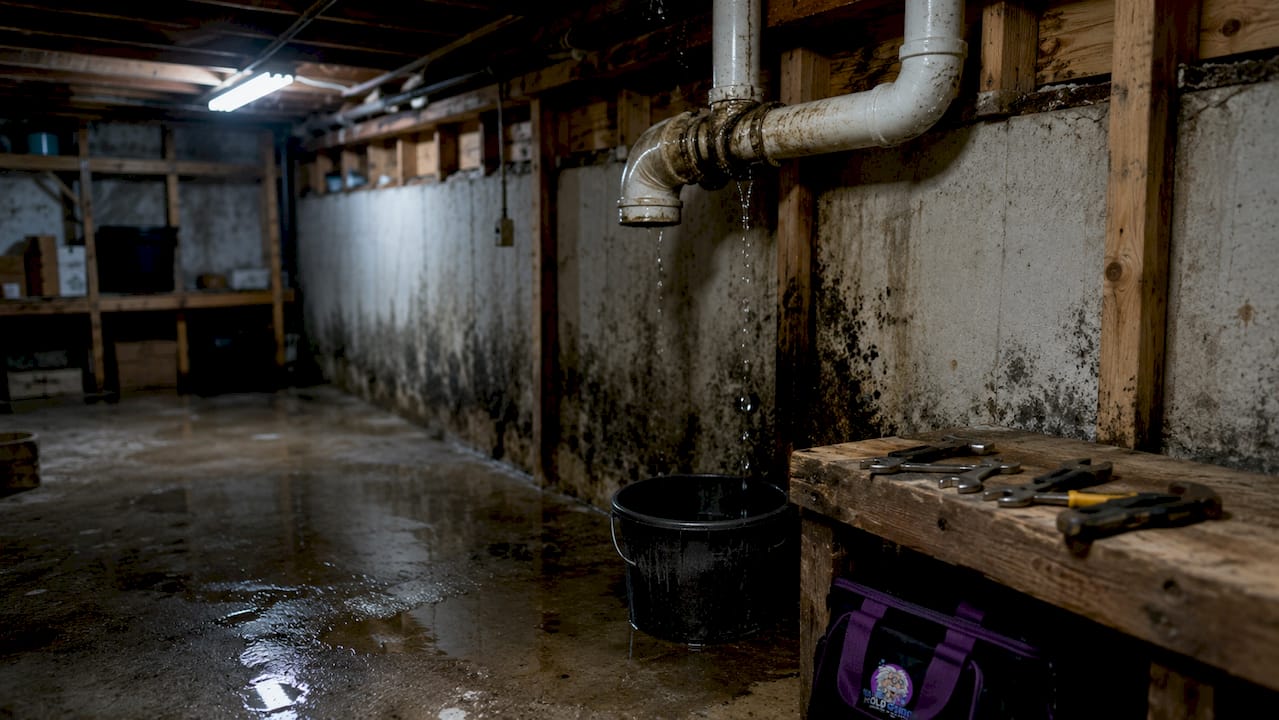
Black mold requires sustained, high-level moisture to take hold. Unlike common household molds that can grow after brief dampness, Stachybotrys chartarum needs water activity above 0.94, making it a reliable marker for chronic water intrusion rather than occasional humidity. If you find it, something has been wet for a long time.
The materials black mold targets are specific. It thrives on surfaces with high cellulose content, including:
- Drywall and gypsum board soaked by roof or pipe leaks
- Paper backing on insulation or cardboard in storage areas
- Untreated wood in basements, crawlspaces, and attics
- Ceiling tiles in areas with poor ventilation or recurring condensation
The most common moisture sources that create these conditions include slow plumbing leaks behind walls, basement flooding, roof leaks that go undetected for weeks, and chronically poor bathroom or kitchen ventilation. Each of these creates the prolonged dampness that black mold growth requires.
One detail most homeowners miss: black mold rarely appears after a single wet event. A burst pipe that gets dried out within 24–48 hours is unlikely to produce Stachybotrys chartarum. The mold you find after a fast cleanup is far more likely to be Cladosporium or Penicillium, both of which grow under lower moisture conditions.
Pro Tip: Before you look for mold, look for water stains, warped baseboards, or musty odors near exterior walls and under sinks. These signs often appear weeks before visible mold colonies form.
How to identify black mold: appearance, testing, and common myths
Color alone cannot reliably identify mold species. Many molds appear dark green, gray, or black, including Cladosporium, Aspergillus niger, and Alternaria. Assuming any dark mold is Stachybotrys chartarum leads to either unnecessary panic or false reassurance.
Stachybotrys chartarum has a distinctive appearance when actively growing. Fresh colonies are slimy and gelatinous because the mold requires constant moisture to survive. Once the moisture source is removed, the colony dries out and becomes powdery. That dry, powdery state is actually more dangerous because it releases spores into the air more easily during disturbance.
| Feature | Stachybotrys chartarum | Common molds (Cladosporium, Penicillium) |
|---|---|---|
| Color | Dark greenish-black | Green, gray, blue, or black |
| Texture when wet | Slimy, gelatinous | Fuzzy or powdery |
| Moisture requirement | Very high, sustained | Moderate to low |
| Common location | Flooded drywall, soaked wood | Bathroom tile, window sills |
| Spore release risk | High when dry | Varies by species |
For definitive identification, DNA-based testing like ERMI analyzes dust samples and identifies multiple mold species simultaneously. ERMI stands for Environmental Relative Moldiness Index, a method developed by the EPA. It is the most reliable way to confirm Stachybotrys chartarum when visual inspection is inconclusive.
A persistent myth is that black mold is always fuzzy. It is not. Another myth is that only black mold produces mycotoxins. Many common mold species produce mycotoxins under the right conditions. The color of the mold tells you very little about its toxicity.
Pro Tip: Skip expensive species-specific testing if you can already see mold. The CDC does not recommend routine testing before removal because the remediation process is the same regardless of species. Fix the moisture source and remove the mold.
What are the health effects and symptoms of black mold exposure?
Black mold is not uniquely toxic compared to other indoor molds. No conclusive evidence shows that Stachybotrys chartarum causes more severe health effects than other mold species found in homes. The health concerns are real, but they are driven by allergic and irritant responses, not by a singular “toxic black mold” mechanism.
The most common black mold symptoms include:
- Sneezing and nasal congestion from spore inhalation
- Itchy, watery eyes triggered by airborne mold particles
- Coughing and wheezing, especially in people with asthma
- Skin irritation or rashes from direct contact
- Headaches and fatigue reported by some people in heavily contaminated spaces
People with pre-existing respiratory conditions face the greatest risk. Damp indoor environments are linked to asthma development and lung inflammation, even in people without prior allergies. That connection holds regardless of which mold species is present.
“Any mold growth in a home signals a moisture problem that needs to be corrected. The focus should be on fixing the source and removing the mold, not on identifying the exact species.” — toxicology consensus reflected in public health guidance from sources including The Conversation and the CDC.
One important biological fact: black mold does not infect living human tissue. It is saprophytic, meaning it feeds on dead organic matter like building materials, not on living cells. The health impact comes from immune reactions to spores and mycotoxins in the air, not from the mold itself invading the body. This distinction matters because it puts the risk in proper perspective. Serious illness from black mold exposure is possible in vulnerable individuals, but the dramatic “toxic black mold kills” narrative overstates what the science actually supports.
You can also learn more about how mold affects indoor air quality to understand the broader picture of what living with mold does to the air you breathe every day.
How to safely remove and prevent black mold in your home
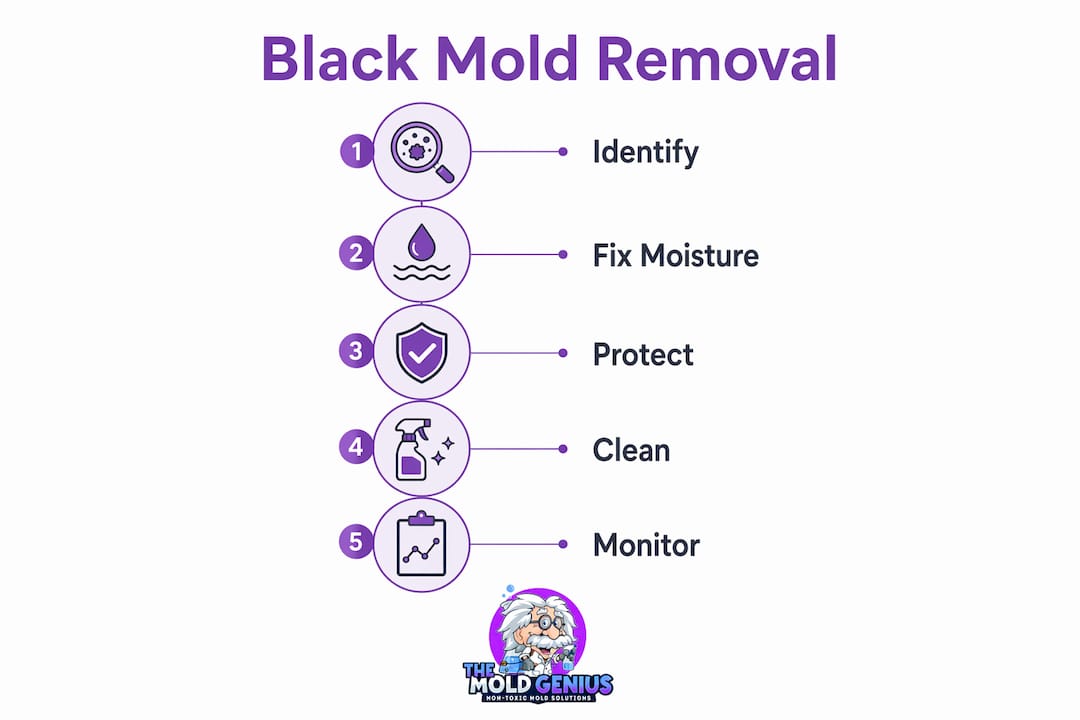
Fixing the moisture source is the first step in any mold removal effort. Cleaning mold off a surface without stopping the water that feeds it guarantees the mold comes back within weeks. This is the single most common mistake homeowners make.
When DIY cleaning is appropriate
Small mold patches on non-porous surfaces like bathroom tile can often be cleaned by homeowners. The EPA generally considers areas under 10 square feet manageable for DIY treatment. Safe DIY steps include:
- Wear an N95 respirator, gloves, and eye protection before touching any mold.
- Seal off the affected area with plastic sheeting to prevent spore spread.
- Scrub hard surfaces with a detergent solution and rinse thoroughly.
- Dry the area completely within 24–48 hours to prevent regrowth.
- Bag and dispose of all contaminated materials in sealed plastic bags.
When to call a professional
Porous materials like drywall, insulation, and wood cannot be effectively cleaned once mold has penetrated the surface. They must be removed and replaced. Professional remediation is also necessary when:
- Mold covers more than 10 square feet
- Mold is hidden behind walls or above ceiling tiles
- The home has experienced flooding or a long-term leak
- Anyone in the household has asthma, allergies, or a compromised immune system
Understanding the difference between mold remediation and mold removal is worth your time before hiring anyone. Removal addresses visible mold. Remediation addresses the full scope, including hidden colonies, moisture sources, and prevention of recurrence.
Surface mold patches often underestimate the actual colony size. Moisture mapping behind surfaces is a critical step that professionals use to find mold hidden inside walls and under flooring. Thermal imaging and moisture meters reveal what no visual inspection can.
Preventive measures that genuinely reduce black mold risk include running bathroom exhaust fans during and after showers, keeping indoor humidity below 50% with a dehumidifier, inspecting roof flashing and plumbing connections annually, and ensuring crawlspaces and attics have adequate ventilation. You can also review a home air quality checklist to build a systematic inspection routine before problems develop.
For crawlspace-specific concerns, an expert guide on crawlspace mold covers the unique challenges of treating mold in that environment, where moisture accumulation and limited airflow create ideal conditions for Stachybotrys chartarum.
Key takeaways
Black mold (Stachybotrys chartarum) signals chronic moisture damage, and fixing the water source is always the first and most critical step before any removal effort begins.
| Point | Details |
|---|---|
| Black mold defined | Stachybotrys chartarum grows on wet, cellulose-rich materials under sustained high moisture conditions. |
| Color is not reliable | Many dark molds look similar; DNA-based ERMI testing is the only way to confirm the species. |
| Health risks are real but limited | Symptoms are allergic and respiratory; black mold does not infect living tissue or cause uniquely severe illness. |
| Fix moisture first | Removing mold without stopping the water source guarantees it returns within weeks. |
| Know when to call a pro | Mold in porous materials, hidden spaces, or areas over 10 square feet requires professional remediation. |
What 25 years of mold jobs taught me about black mold fear
After more than two decades working in homes across the Chicagoland area, the pattern I see most often is this: homeowners find dark mold, assume the worst, and either panic or ignore it entirely. Both responses cost them more in the long run.
The fear around black mold is understandable. The media has done a thorough job of making Stachybotrys chartarum sound like a death sentence. But in practice, the mold I find most often behind walls and in attics is not Stachybotrys at all. It is Cladosporium or Aspergillus, both of which still need to come out, but neither of which carries the same cultural baggage.
What I tell every homeowner is this: the color of the mold matters far less than the moisture reading behind the wall. I have walked into homes where a small, dark patch on a ceiling tile turned out to be surface-level and easy to address. I have also walked into homes where a “small” visible patch was the tip of a colony covering an entire wall cavity. You cannot know which situation you are in without proper moisture mapping.
The other misconception I run into constantly is that testing must come before treatment. The CDC’s own guidance does not support that approach. Testing tells you what species is present. It does not change what you do next. You still remove the mold, fix the moisture, and prevent recurrence. Spending $400 on a lab test before calling a remediation company is money that could go toward actually solving the problem.
My honest advice: if you see mold, treat it as a moisture problem first and a mold problem second. Get the source identified, get the affected materials assessed, and get it handled before the next rain or humidity spike makes it worse.
— Jim
Themoldgenius can help you resolve black mold the right way
If you have found mold in your home and want it handled correctly the first time, Themoldgenius serves the Chicagoland area with a process built around finding the full scope of the problem, not just what is visible.

Their three-phase approach covers diagnosis with thermal imaging and moisture detection, removal using Pure Cloud Technology (a dry fogging system with hospital-grade hydrogen peroxide and silver ions that reaches mold behind walls and above insulation), and prevention by correcting the root moisture cause. Most jobs wrap up in a single day with no need to gut rooms or leave your home overnight. Themoldgenius offers free estimates and works with major insurers including Allstate, State Farm, USAA, and Farmers. Visit their mold removal and remediation page to see what the process looks like and request your free assessment.
FAQ
What exactly is black mold?
Black mold is a common name for Stachybotrys chartarum, a fungus that grows on wet, cellulose-rich materials like drywall and wood. The term is also used loosely to describe any dark-colored mold, which makes visual identification unreliable without testing.
Is black mold dangerous to your health?
Black mold causes allergic and respiratory symptoms including sneezing, coughing, wheezing, and skin irritation, particularly in people with asthma or allergies. It does not infect living tissue, and no conclusive evidence shows it is uniquely more toxic than other common indoor molds.
How do I know if I have black mold or regular mold?
Color alone cannot tell you. Stachybotrys chartarum appears slimy and dark greenish-black when wet, but many other molds look similar. DNA-based ERMI testing is the only reliable method for species confirmation.
Do I need to test for black mold before removing it?
The CDC does not recommend routine mold testing before removal because the remediation process is the same regardless of species. Fixing the moisture source and removing affected materials is the priority.
Can black mold come back after removal?
Yes, if the moisture source is not corrected. Mold removal without addressing the underlying water problem will result in regrowth, often within weeks. Effective remediation always includes identifying and fixing the root cause.