
Mold returns after cleaning primarily because the underlying moisture source that feeds its growth is not eliminated. The U.S. EPA states that mold spores are ubiquitous and will only grow when moisture is available. Cleaning removes visible mold but does not sterilize the space or address hidden dampness in porous materials like drywall, allowing spores to germinate again. The Minnesota Department of Health identifies leaks, condensation, high indoor humidity (often above 60%), and flooding as primary drivers of mold recurrence.
Mold recurrence is defined as the regrowth of mold colonies after cleaning because the underlying moisture source was never eliminated. Scrubbing visible mold off a bathroom wall or basement ceiling feels like a win. But if the conditions that fed that mold are still present, you have not solved the problem. You have reset it. The U.S. EPA is direct on this point: mold spores remain present in virtually every indoor environment, and they will not grow unless moisture is available. That single fact explains why mold returns after cleaning in the vast majority of cases. Fix the moisture, and the spores stay dormant. Leave it, and the cycle repeats.
Why mold returns after cleaning: moisture is the real culprit
Mold does not grow because a surface was not scrubbed hard enough. It grows because moisture is present. The Minnesota Department of Health identifies four primary moisture sources that drive mold recurrence after cleaning: leaks, condensation, high indoor humidity, and flooding. Each one creates the damp conditions mold spores need to germinate and form new colonies.
The most overlooked source is condensation. When warm, humid air contacts a cold surface like an exterior wall, a window frame, or an uninsulated pipe, moisture accumulates. That surface stays damp for hours or days, often without anyone noticing. Condensation causes recurring mold precisely because it is invisible and continuous. You clean the mold, but the wall keeps getting wet every night.
Hidden leaks inside walls are equally problematic. A slow drip from a supply line or a roof penetration can keep drywall and insulation wet for months. The surface looks dry. The interior is not. Mold grows where you cannot see it, and no amount of surface cleaning reaches it.
Common moisture sources that cause mold to return include:
- Plumbing leaks inside walls, under sinks, or behind appliances
- Roof leaks that wet attic decking and insulation (see attic mold causes)
- Condensation on cold surfaces in basements, crawlspaces, and exterior walls
- Flooding or water intrusion that was not fully dried out
- High indoor humidity from cooking, showering, or poor ventilation
Pro Tip: Buy a digital hygrometer at any hardware store and place it in your basement or bathroom. If the reading stays above 60% regularly, you have a moisture problem that cleaning alone will not fix.
Does cleaning mold actually work long-term?
Cleaning removes visible mold growth. It does not sterilize the space, and it does not eliminate spores. The EPA is clear that mold spores are always present in indoor air and dust. Trying to remove every spore is neither possible nor the right goal. The right goal is making the environment inhospitable to growth.
Bleach and other biocides kill surface mold on non-porous materials like tile and glass. On porous materials, they fall short. Here is why cleaning alone fails to stop mold from coming back:
- Bleach does not penetrate porous materials. Drywall, wood framing, and insulation absorb moisture and harbor mold internally. The bleach kills what is on the surface. The mold inside the material survives and regrows.
- Spores remain in the air and dust. Even after a thorough cleaning, millions of spores settle back onto surfaces within hours. If moisture is still present, they germinate.
- Cleaning does not dry the material. Wiping a surface removes visible growth but leaves the underlying material damp. Remediation is incomplete until moisture problems are fixed and no mold or odors remain.
- Repeated cleaning without moisture control is a temporary reset. Each cleaning cycle buys a few weeks or months at best. The mold returns because the conditions never changed.
- Odors signal active growth. A musty smell after cleaning means mold is still active somewhere, likely inside a wall or under flooring where cleaning products never reached.
The mold regrowth explanation most homeowners miss is simple: cleaning is maintenance, not remediation. It manages symptoms. Moisture control is the cure.
How to stop mold from coming back after cleaning
Preventing mold from returning requires two things working together: eliminating moisture sources and maintaining conditions that keep spores dormant. Neither step alone is enough.
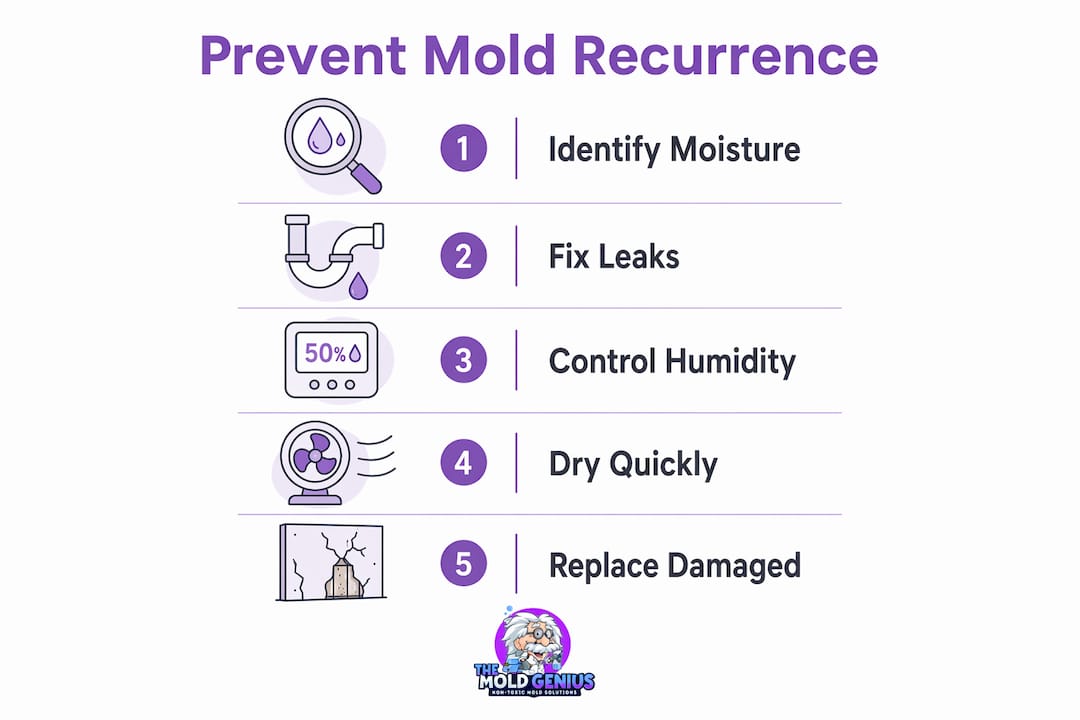
Fix every moisture source first
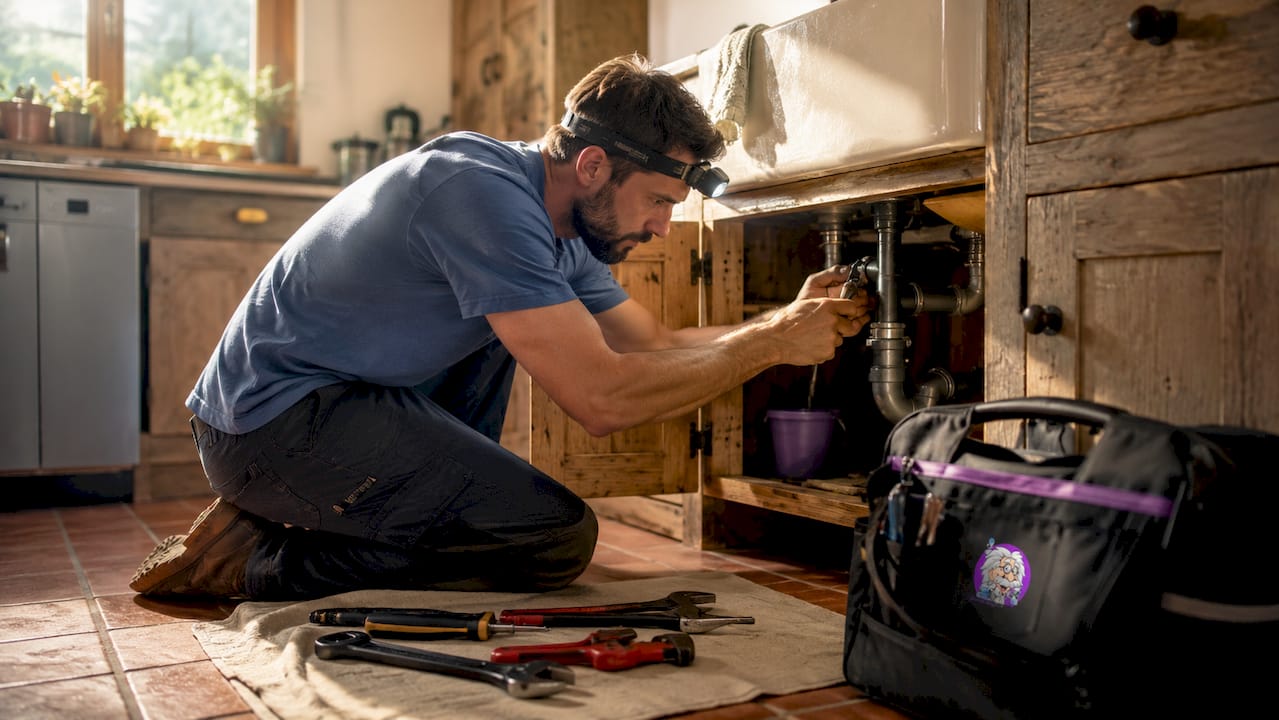
Identify and repair all water intrusion points before cleaning anything. Check under sinks, around water heaters, along basement walls, and in crawlspaces. Inspect the roof after any storm. Look for staining on ceilings, which signals an active or past leak. Water damage that is not fully repaired will feed mold indefinitely regardless of how many times you clean.
Control indoor humidity year-round
The EPA recommends keeping indoor humidity between 30–50%, with a hard ceiling of 60%. Above 60%, mold growth becomes likely. A whole-home dehumidifier handles basements and large spaces. Exhaust fans in bathrooms and kitchens remove moisture at the source. Opening windows when outdoor humidity is low helps too.
Dry wet materials within 24–48 hours
The EPA’s 24–48 hour drying window is the most practical benchmark in mold prevention. After any water event, whether a pipe burst, a flood, or a spill on carpet, materials must be dried completely within that window. Fans, dehumidifiers, and wet vacuums all help. If materials are still damp after 48 hours, mold growth has likely already started.
Here is a comparison of approaches to moisture control:
| Approach | Effectiveness | Best For |
|---|---|---|
| Surface cleaning only | Low, temporary | Cosmetic maintenance on non-porous surfaces |
| Dehumidifier use | Moderate | Ongoing humidity control in basements and crawlspaces |
| Exhaust fan installation | Moderate to high | Bathrooms and kitchens with steam and condensation |
| Leak repair plus drying | High | Stopping recurrence from plumbing or roof leaks |
| Full remediation with moisture repair | Highest | Persistent or widespread mold with hidden moisture sources |
Pro Tip: After any water event, pull back carpet edges and check the padding underneath. Carpet dries on top first. The padding underneath stays wet for days and is one of the fastest paths to mold growth after water damage.
Know when to replace instead of clean
Some materials cannot be saved. Drywall that has been wet for more than 48 hours, insulation that has absorbed water, and ceiling tiles with visible mold growth should be removed and replaced. Cleaning these materials is not effective because surface cleaning cannot reach mold growing inside porous building materials. Keeping contaminated porous materials in place guarantees the mold comes back.
Does professional remediation actually prevent mold recurrence?
Professional mold remediation differs from homeowner cleaning in three concrete ways: it addresses the moisture source, it uses equipment to verify complete drying, and it includes clearance testing to confirm the mold is gone.
A trained remediator uses moisture meters and thermal imaging to find water inside walls and under floors that no visual inspection would catch. That equipment identifies exactly where the moisture is coming from, which is the only way to fix it permanently. Professional remediation includes fixing moisture sources, drying affected areas, and clearance testing to confirm no further growth.
Clearance testing is the step most homeowners never get with DIY cleaning. It confirms that mold spore counts are back to normal levels and that no active colonies remain. Without that verification, you are guessing. With it, you know the job is done.
The risks of incomplete remediation are real. Mold left inside walls affects air quality throughout the home. It can spread to adjacent materials. And it will keep returning until the moisture source is found and fixed.
Pro Tip: If mold has returned more than twice in the same location after cleaning, that is a strong signal of a hidden moisture source. A professional moisture inspection, not another cleaning, is the right next step.
What are the key takeaways for preventing mold recurrence?
Mold returns after cleaning because moisture control, not cleaning thoroughness, is the decisive factor in preventing mold recurrence.
| Point | Details |
|---|---|
| Moisture drives recurrence | Mold spores are always present indoors and only grow when moisture is available. |
| Cleaning alone is temporary | Surface cleaning removes visible mold but does not eliminate spores or dry porous materials. |
| 24–48 hour drying window | Wet materials must be dried completely within 48 hours to prevent mold from taking hold. |
| Humidity target: 30–50% | Keeping indoor relative humidity below 60% removes the conditions mold needs to grow. |
| Professional remediation verifies results | Clearance testing after professional treatment confirms mold is no longer active or regrowing. |
What 25 years of mold jobs taught me about recurrence
The most common thing I hear from homeowners is some version of: “I cleaned it twice and it keeps coming back. The cleaning must not be working.” That framing puts the blame in the wrong place. The cleaning worked fine. The moisture problem was never touched.
I have seen this pattern in every type of home. A bathroom ceiling gets scrubbed with bleach every few months. The mold returns within weeks. Nobody has checked whether the exhaust fan is actually venting outside or just recirculating air into the attic. That one fix, a $15 duct repair, stops the recurrence permanently.
The homeowners who struggle most are the ones who treat mold as a cleaning problem. The ones who succeed treat it as a moisture management problem. Those are two very different mindsets, and they lead to very different outcomes.
My honest advice: the first time mold returns after cleaning, stop cleaning and start investigating. Check humidity levels. Look for leaks. Feel walls for dampness. The mold is telling you something is wet somewhere. Listen to it. Ongoing humidity monitoring and prompt drying after any water event are the habits that actually keep homes mold-free long term. Cleaning is just the starting point.
— Jim
Stop the cycle with professional mold removal
If mold keeps returning in your home, the problem is not your cleaning routine. It is an unresolved moisture issue that needs to be found and fixed for good.

Themoldgenius serves the Chicagoland area with a three-phase process: moisture detection using thermal imaging, mold removal using Pure Cloud Technology (a dry fogging system with hospital-grade hydrogen peroxide), and prevention by fixing the root cause. Most jobs finish in a single day. Whether the problem is in your basement, attic, or crawlspace, Themoldgenius has the tools and experience to stop recurrence, not just treat the surface. Explore full mold removal and remediation services or contact Themoldgenius for a free estimate.
Frequently Asked Questions About Mold Recurrence and Remediation
Why does mold keep coming back after i clean it?
Mold returns because the moisture source was not eliminated. Cleaning removes visible growth, but spores remain and regrow whenever damp conditions return.
Can bleach permanently remove mold?
Bleach kills surface mold on non-porous materials but does not penetrate drywall, wood, or insulation. Mold inside porous materials survives and regrows after bleach treatment.
What humidity level prevents mold growth?
The EPA recommends keeping indoor relative humidity between 30–50%, with a maximum of 60%. Above 60%, mold growth becomes likely in most homes.
How quickly does mold grow after water damage?
Mold can begin growing within 24–48 hours of water exposure. The EPA identifies this window as the critical period for drying materials to prevent mold from taking hold.
When should i call a professional instead of cleaning mold myself?
Call a professional when mold returns repeatedly in the same location, when it covers a large area, or when you suspect hidden moisture inside walls or under flooring. Professional remediation includes moisture source repair and clearance testing that DIY cleaning cannot provide.