
Mold remediation protects a home's equity by eliminating contamination, correcting moisture sources, and verifying a clean environment, which are essential for maintaining property value. Unaddressed mold can significantly reduce resale value, with the page stating it lowers value by 20% to 37% on average. This issue also triggers buyer financing rejections and exposes sellers to legal liability for non-disclosure, as highlighted by cases like Florida's Johnson v. Davis.
Mold remediation is the process of eliminating mold contamination, correcting moisture sources, and verifying a clean environment — three steps that directly protect your home’s equity. Left unaddressed, mold doesn’t just damage drywall and framing. It triggers buyer financing rejections, legal liability, and appraisal deductions that can cost you tens of thousands of dollars at closing. Understanding how mold remediation protects equity means understanding the full chain from discovery to clearance, and why cutting any step short puts your investment at risk.
How mold remediation protects equity at resale
Mold is one of the few property defects that affects every layer of a real estate transaction at once: appraisal value, buyer financing, and buyer psychology. Mold lowers resale value by 20% to 37% on average, depending on the severity of the problem. On a $400,000 home, that’s a potential loss of $80,000 to $148,000 before you’ve even negotiated.
The financing barrier compounds the problem. Many buyers and mortgage lenders avoid homes with active mold issues entirely, which shrinks your buyer pool to cash purchasers and investors who will demand steep discounts. FHA loans add another layer of complexity: FHA appraisals require addressing mold before loan approval, with repair timelines that can stretch up to 120 days. Every week a home sits in that limbo costs you carrying costs, taxes, and negotiating leverage.
Remediation before listing changes the math entirely. A professionally remediated home with documented clearance can be marketed at full value, and sellers who remediate and disclose recoup remediation costs through higher sale prices and fewer post-closing disputes. The mold remediation benefits here are concrete: more qualified buyers, faster closings, and a defensible asking price.
Pro Tip: Get a pre-listing mold inspection before you set your price. Discovering mold after an offer is accepted gives buyers maximum leverage to renegotiate. Discovering it first gives you control.
| Scenario | Impact on equity |
|---|---|
| Active mold, no remediation | 20–37% value reduction, limited buyer pool, financing rejections |
| Surface cleaning only | Spore spread risk, no clearance documentation, lender skepticism |
| Full professional remediation | Restored buyer pool, documented safety, reduced post-closing disputes |
| Remediation with clearance report | Maximum buyer confidence, lender approval, strongest negotiating position |
What are the legal risks of not disclosing mold?
Failing to remediate mold before selling doesn’t just hurt your sale price. It can expose you to fraud liability that follows you long after closing. In Florida, the landmark Johnson v. Davis case established that active concealment of material defects, including painting over mold, constitutes fraud. Sellers found liable face damages that can exceed the original remediation cost many times over.
The legal exposure from undisclosed mold typically falls into three categories:
- Active concealment. Painting over visible mold or using air fresheners to mask odors before showings is treated as intentional fraud in most states, not just negligence. Courts have awarded buyers full repair costs plus legal fees.
- Failure to disclose known defects. Even without active concealment, sellers who knew about mold and said nothing face rescission claims, where buyers can unwind the entire transaction and recover their purchase price.
- Post-closing disputes. Buyers who discover mold after closing frequently pursue arbitration or litigation. Without a clearance report proving the home was clean at sale, sellers have little defense.
Remediation paired with full written disclosure is the only approach that protects equity on both sides of the transaction. A mold pre-sale inspection creates a paper trail that demonstrates good faith, limits liability, and builds the buyer trust that supports your asking price. Transparency is not just ethical here. It is financially rational.
Why moisture control is the most overlooked step in remediation
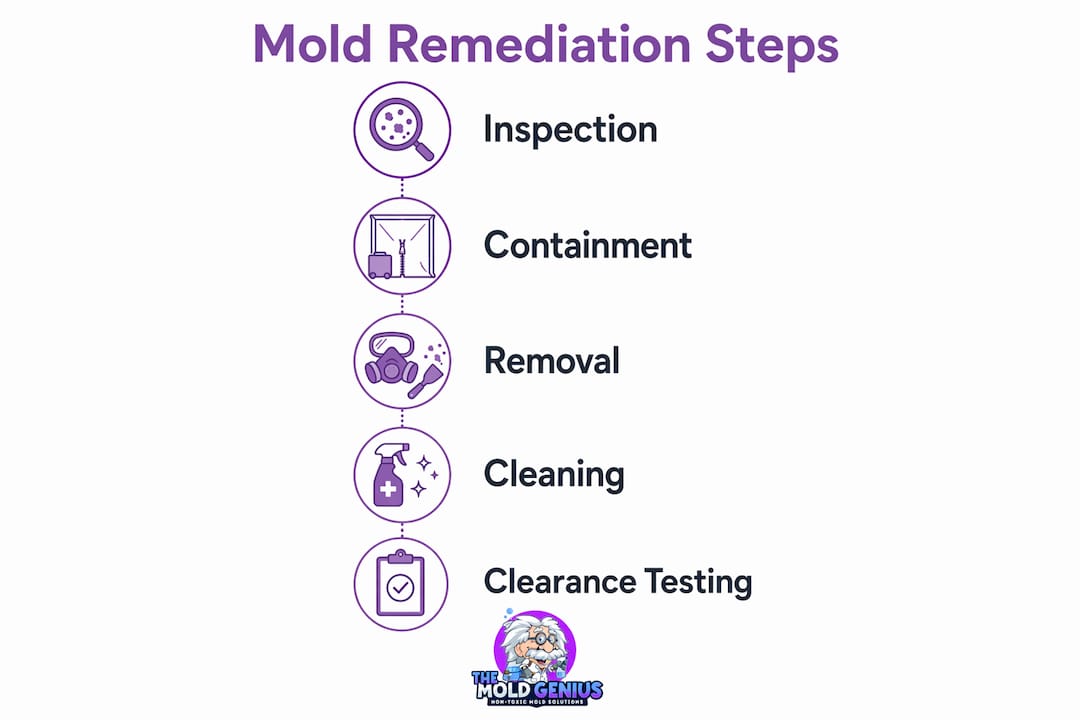
The industry-standard definition of mold remediation covers three phases: source control, cleanup, and verification. Most homeowners focus on the middle step and skip the first and last. That mistake is expensive. Clearance inspections verify remediation success and moisture correction, confirming the space is safe and preventing recurring mold issues that would require a second round of treatment.
Here is why each phase matters for protecting your equity:
- Source control. Mold is a symptom. The moisture problem is the disease. A roof leak, a failed vapor barrier in a crawlspace, or a bathroom exhaust fan venting into the attic will regenerate mold within weeks of any cleanup. Fixing the moisture source is what makes remediation permanent.
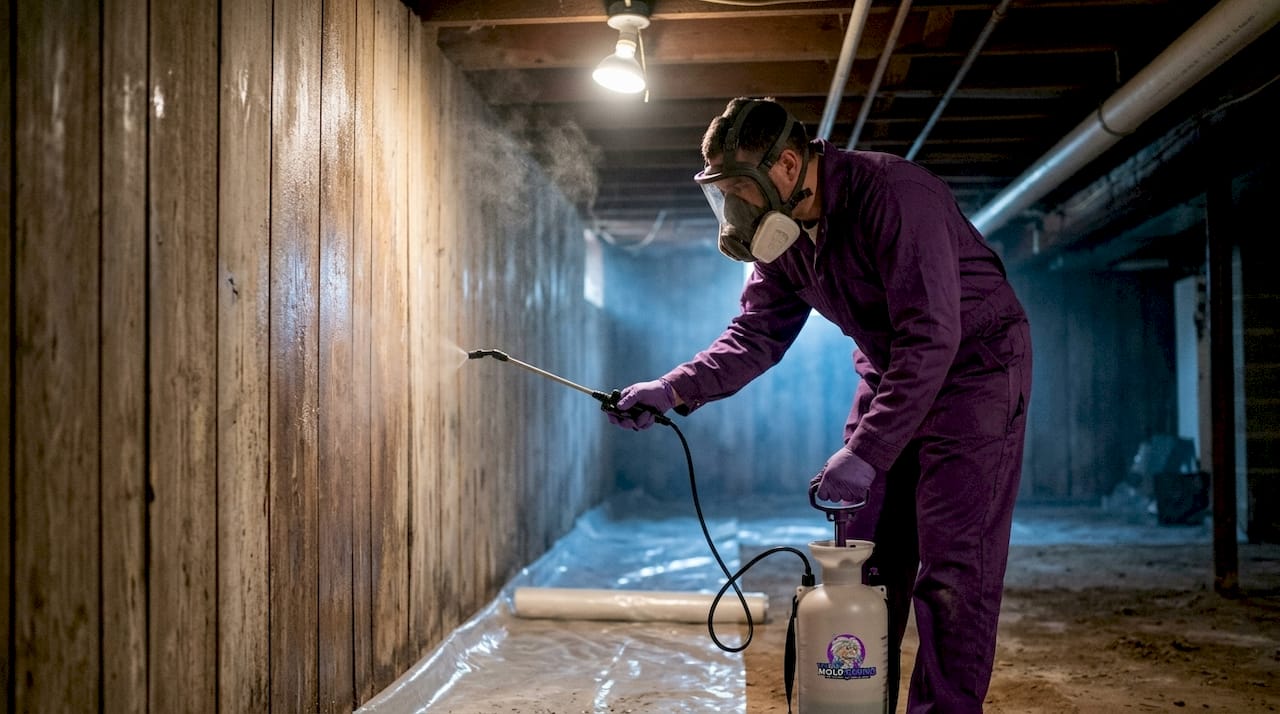
- Professional cleanup. Surface scrubbing with bleach does not remove mold. It removes visible growth while leaving spores embedded in porous materials like drywall, insulation, and wood framing. Professional remediation uses containment, HEPA filtration, and in some cases dry fogging systems to reach mold in cavities that surface cleaning cannot touch.
- Clearance verification. Post-remediation testing by an independent inspector confirms that spore counts have returned to normal levels. Clearance documentation is what lenders, insurers, and buyers actually need to see. The remediation itself matters, but the paper proof is what moves transactions forward.
A real-world example: a homeowner in a Chicago suburb treated visible basement mold with bleach and listed the home. The buyer’s inspector found elevated spore counts in the HVAC system, which had distributed mold throughout the house. The deal collapsed. A full professional remediation with clearance testing would have cost a fraction of the price reduction the seller ultimately accepted on a second sale attempt.
Pro Tip: Always hire an independent third party for your clearance inspection, not the same company that did the remediation. Independent verification carries far more weight with lenders and buyers.
Does timing affect how much equity you can protect?
Speed is a direct equity lever. Mold can grow within 24 to 48 hours after water intrusion, which means a burst pipe or a basement flood that goes unaddressed over a weekend can turn a $500 drying job into a $15,000 remediation project. The longer mold grows, the deeper it penetrates structural materials, and the more expensive and disruptive the removal becomes.
DIY approaches create a specific set of risks that homeowners underestimate:
- Spore dispersal. Disturbing mold colonies without proper containment sends spores airborne and into HVAC systems, spreading contamination to rooms that were previously clean.
- Missed hidden growth. Mold behind walls, above insulation, and inside ductwork is invisible to the naked eye. Without thermal imaging and moisture meters, surface-only cleaning leaves active colonies untouched.
- No documentation. Even a thorough DIY cleanup produces no clearance report, which means lenders and buyers have no evidence the problem was resolved. The impact of mold on property value does not disappear just because the visible mold does.
- Recurrence. Without addressing the moisture source, mold returns. A second infestation after a buyer moves in is the worst possible outcome for your reputation and your legal exposure.
Professional remediation firms use moisture meters, thermal imaging cameras, and containment protocols that prevent cross-contamination. They also dry structural materials to target moisture levels before closing walls, which is the step that prevents recurrence. Acting within the first 24 to 48 hours after water damage, and calling a professional rather than reaching for bleach, is the single most cost-effective decision a homeowner can make for value preservation through remediation.
What are the key takeaways about mold remediation and home equity?
Mold remediation protects equity by eliminating contamination, correcting moisture sources, and providing documented clearance that satisfies buyers, lenders, and legal disclosure requirements.
| Point | Details |
|---|---|
| Mold’s financial impact | Mold reduces resale value by 20–37%, with direct effects on appraisals and buyer financing. |
| Remediation before listing | Professional remediation expands the buyer pool and supports full asking price at sale. |
| Legal disclosure | Failing to disclose or concealing mold creates post-closing fraud liability that can exceed remediation costs. |
| Moisture source control | Fixing the moisture source is what makes remediation permanent and prevents costly recurrence. |
| Clearance documentation | A third-party clearance report is the proof lenders, insurers, and buyers require to proceed with confidence. |
What I’ve learned after 25 years of watching homeowners handle mold
The homeowners who protect their equity best are not the ones who spend the most on remediation. They are the ones who act fast, document everything, and treat the moisture problem as seriously as the mold itself. I have seen sellers lose $40,000 in price reductions because they waited three months to address a basement leak. I have also seen sellers recoup their entire remediation cost because they had a clean clearance report ready at the first showing.
The misconception I encounter most often is that remediation is a cost with no return. That framing is backwards. Remediation is the action that restores your home to its full appraised value. The cost of not remediating, measured in price reductions, financing failures, and legal exposure, is almost always larger than the cost of doing it right.
One more thing: mold inspection should be part of your regular home maintenance schedule, not just a pre-sale panic. A full home mold assessment every few years, especially after any water event, catches problems when they are small and cheap to fix. Waiting until you are under contract to discover a mold problem is the most expensive version of this story, and it is entirely avoidable.
— Jim
Protect your home’s equity with Themoldgenius

Themoldgenius serves the Chicagoland area with a three-phase remediation process built specifically to protect what your home is worth. Their Pure Cloud Technology dry fogging system reaches mold behind walls, above insulation, and inside tight spaces that traditional methods miss. Most jobs wrap up in a single day, with homeowners returning the same evening. Themoldgenius works directly with major insurers including Allstate, State Farm, USAA, and Farmers, and their realtor network program helps agents resolve mold issues before closing. Free estimates are available. If you are ready to stop guessing and start protecting, explore their mold remediation services and get a professional assessment scheduled today.
Frequently Asked Questions About Mold Remediation and Home Equity
How much does mold reduce home value?
Mold reduces resale value by 20% to 37% on average, according to data summarized by Angi from Appraisal Journal research. The exact reduction depends on the severity of the infestation and whether documented remediation has been completed.
Does mold remediation improve equity?
Professional mold remediation restores buyer financing eligibility and supports full asking price, which directly protects and can recover lost equity. Documented clearance after remediation is the key factor that limits appraisal discounting.
Do sellers have to disclose mold?
Most states require sellers to disclose known material defects, and mold qualifies. In Florida, active concealment of mold is treated as fraud under the Johnson v. Davis standard, exposing sellers to post-closing damages.
What happens if mold is found during a home inspection?
Buyers can use mold findings to renegotiate price, request remediation credits, or walk away entirely. FHA and VA loan buyers may be required to walk away if the lender flags mold as a condition that must be resolved before closing.
How long does mold remediation take?
Most professional mold remediation jobs take one to three days, depending on the size of the affected area and the method used. Dry fogging systems like Pure Cloud Technology used by Themoldgenius can complete most residential jobs in a single day.