
Black mold, often identified as Stachybotrys chartarum, is recognized by its dark greenish-black, slimy patches and a persistent musty or earthy odor. This mold typically thrives on cellulose-rich materials like drywall, wood, and ceiling tiles, indicating an active moisture problem in the home. Accurate identification of black mold is crucial because indoor exposure can trigger asthma attacks, allergic reactions, and respiratory inflammation in occupants.
Black mold in your home is identified by its dark, slimy patches and a persistent musty odor that signals active moisture problems and potential health risks. The industry term for the most notorious species is Stachybotrys chartarum, though homeowners commonly call any dark fungal growth “black mold.” Knowing how to identify black mold in your home accurately matters because indoor mold exposure triggers asthma attacks, allergic reactions, and respiratory inflammation. The good news is that your eyes and nose are your most reliable tools, and you do not need a lab test to take action.
How to identify black mold in your home by sight and smell
Stachybotrys chartarum appears as dark greenish-black slimy patches on cellulose-rich materials like drywall, wood, and ceiling tiles. The texture is the giveaway. Fresh growth looks wet and almost gelatinous, while older colonies dry out and become powdery. Both stages share that characteristic dark coloring.
The smell is equally telling. Mold produces microbial volatile organic compounds as it grows, and persistent musty or earthy odors are a direct result. Think rotting leaves, damp cardboard, or a basement that has not been opened in months. If that smell hits you when you walk into a room, treat it as a warning sign even before you see anything.

Color alone is not a reliable identifier. Scientists confirm that mold color varies widely depending on species and the surface it grows on. Green, gray, white, and black molds can all appear on the same wall. Focusing only on color leads homeowners to miss lighter-colored mold that is just as problematic.
Here are the key visual and sensory traits to look for:
- Color: Dark greenish-black, sometimes with gray or brown edges
- Texture: Slimy or wet when active, powdery or crumbly when dry
- Pattern: Irregular patches, often spreading outward from a central moisture source
- Smell: Musty, earthy, or damp. Similar to wet soil or decomposing organic matter
- Location: Typically on porous surfaces near water sources, such as under sinks, around window frames, or on bathroom ceilings
Pro Tip: Shine a flashlight at a low angle across a wall surface. This raking light technique reveals texture differences that are invisible under normal overhead lighting, making early-stage mold patches much easier to spot.
Where does hidden mold grow and what are the signs?
Hidden mold is the version that causes the most long-term damage because homeowners do not find it until the problem is severe. Mold grows inside HVAC systems on damp coils and duct surfaces, releasing spores into every room without any visible patch on the walls. It also thrives behind drywall, under carpets, and inside wall cavities where a slow leak has gone unnoticed.
The physical clues are there if you know what to look for. Paint that bubbles or peels, warped baseboards, and dark grout lines that do not clean off are all signs that mold is actively growing behind the surface. These are not cosmetic issues. They are structural signals pointing to a moisture problem underneath.
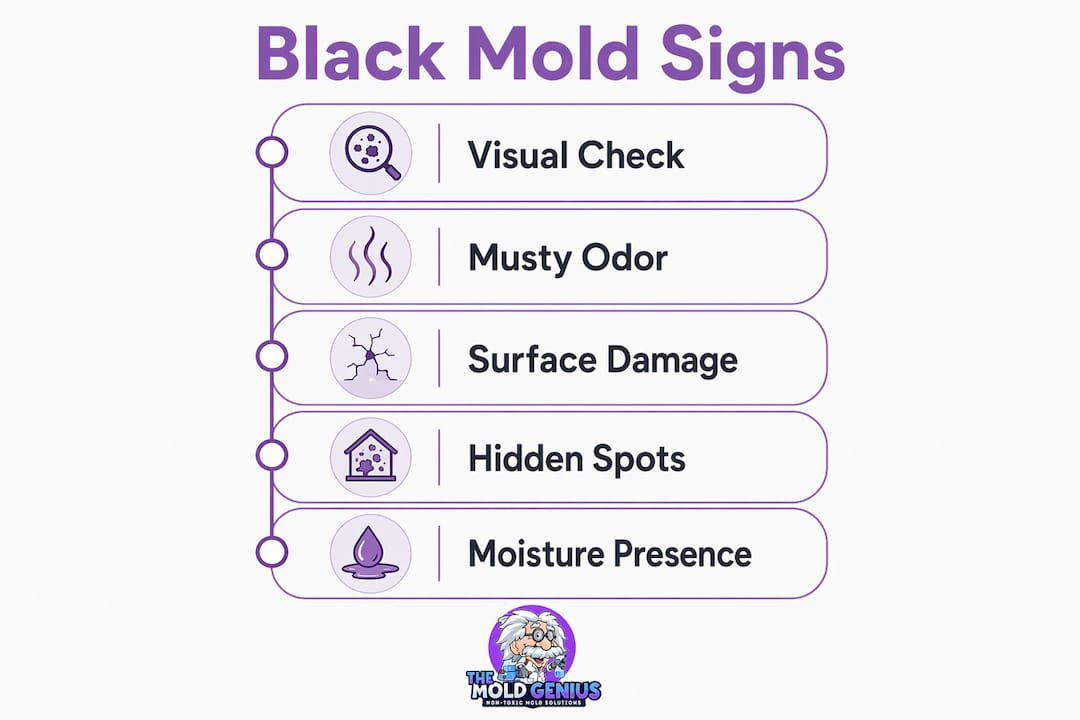
A persistent musty odor with no visible mold is one of the strongest indicators of hidden growth. If a room consistently smells damp despite cleaning, the source is almost certainly behind a surface. Moisture meters and thermal imaging detect elevated moisture levels inside walls and ceilings, giving you a map of where to look without tearing anything apart.
| Hidden mold sign | What it means |
|---|---|
| Bubbling or peeling paint | Moisture trapped behind the wall surface |
| Warped or soft baseboards | Water absorption at floor level, often from a slow leak |
| Persistent musty odor | Active mold growth in a concealed space |
| Dark, stained grout that won’t clean | Mold embedded in porous grout lines |
| Allergy symptoms only at home | Airborne spores from a hidden colony |
For a deeper look at locating mold in non-visible areas, the hidden mold detection guide from Themoldgenius covers wall-specific methods in detail.
Is black mold dangerous, and what health risks does it cause?
The US EPA states clearly that “black mold” is a colloquial term for various fungi and not a uniquely toxic category. That distinction matters because it shifts the focus from color to presence. Any indoor mold growth is a potential health hazard, regardless of what it looks like.
“Black mold is not more dangerous than other molds. Any indoor mold can cause asthma attacks and allergic reactions. The priority is eliminating the mold and the moisture source, not identifying the exact species.”
US EPA, Mold Training Course
The most common black mold symptoms include sneezing, runny nose, red eyes, skin rashes, and worsening asthma. People with compromised immune systems, young children, and the elderly face higher risks. A useful diagnostic clue: if your symptoms consistently improve when you leave the house and return when you come back, indoor mold is a likely cause.
Common health effects linked to indoor mold exposure include:
- Allergic reactions including sneezing, nasal congestion, and itchy eyes
- Asthma attacks triggered or worsened by mold spores
- Respiratory inflammation, especially with prolonged exposure
- Skin irritation from direct contact with mold colonies
- Headaches and fatigue in poorly ventilated, mold-affected spaces
Step-by-step mold inspection checklist for homeowners
A structured inspection takes less than an hour and gives you a clear picture of your home’s mold risk. Gather these tools before you start: a flashlight, a moisture meter, disposable gloves, an N95 respirator mask, and a phone or camera to document findings.
- Start with a smell check. Walk through each room with the windows closed for at least 30 minutes. A musty odor in any room is your first data point.
- Inspect high-risk areas first. Check under sinks, around toilets and tubs, behind washing machines, and along basement walls. These are the spots where moisture accumulates most often.
- Look at surfaces closely. Use your flashlight at a low angle to catch texture variations on walls and ceilings. Check grout lines, window sills, and the underside of carpets near exterior walls.
- Use a moisture meter. Press the probes against drywall, wood trim, and flooring near plumbing. Readings above 16% moisture content in wood or 1% in drywall indicate conditions where mold can grow.
- Check your HVAC system. Inspecting HVAC coils for accumulated wet dust and dark buildup is critical for indoor air quality. Look at the drip pan under the air handler for standing water or dark staining.
- Document everything. Take photos of any suspicious areas. Do not touch or disturb mold patches. Disturbing colonies spreads spores to clean areas of the home.
- Assess the moisture source. Every mold colony has a water source. Trace it. A leaking pipe, condensation from poor insulation, or a roof leak are the most common culprits.
Pro Tip: Skip the store-bought mold test kits for initial screening. Testing kits have limited diagnostic value because mold presence is usually apparent by sight or smell. Overreliance on kits delays remediation. Use your senses and a moisture meter first.
| Inspection method | Best for | Limitation |
|---|---|---|
| Visual and smell check | Surface mold, initial screening | Misses mold behind walls |
| Moisture meter | Detecting wet areas behind surfaces | Does not confirm mold species |
| Thermal imaging | Mapping hidden moisture zones | Requires professional equipment |
| Air sampling | Measuring spore concentration | Needs lab analysis to interpret |
For a full mold inspection checklist tailored to homeowners, Themoldgenius provides a step-by-step resource covering air quality testing and moisture control.
Common mistakes when identifying black mold
The biggest mistake homeowners make is treating color as the only identifier. A white or green patch gets ignored while a dark stain triggers panic. Both deserve equal attention. Visual and olfactory identification combined with moisture detection gives you the most accurate picture, not color alone.
Here are the most common errors and how to avoid them:
- Ignoring musty odors. A smell without visible mold is not a false alarm. It means the mold is hidden, which is worse.
- Cleaning mold without fixing the moisture source. Mold returns if the water problem is not fixed, even after thorough cleaning. Address the leak or condensation issue first.
- Disturbing mold colonies. Scrubbing or vacuuming mold without proper containment spreads spores throughout the home. Document with photos and call a professional before touching anything significant.
- Overrelying on DIY test kits. These kits detect mold presence but cannot tell you the extent of the problem, the species, or the spore concentration. They create a false sense of certainty.
- Skipping the mold growth conditions checklist. Mold needs moisture, warmth, and organic material to grow. Checking these environmental factors tells you whether your home is at ongoing risk.
Pro Tip: If you find mold in one area, check the rooms directly above and below it. Mold follows moisture, and moisture travels through floors and ceilings. A bathroom leak on the second floor often shows up as mold on the first-floor ceiling.
For homeowners wondering whether to handle removal themselves, the professional remediation guide from Themoldgenius outlines exactly when DIY stops being safe.
Key Takeaways
Accurate black mold identification requires sensory assessment, moisture detection, and knowledge of common hiding spots. Color alone is never enough to confirm or dismiss a mold problem.
| Point | Details |
|---|---|
| Sight and smell are primary | Dark patches and musty odors justify cleanup without professional testing. |
| Color is unreliable alone | Any mold color can cause health problems; focus on presence and moisture. |
| Hidden mold leaves clues | Peeling paint, warped baseboards, and persistent odors signal mold behind surfaces. |
| Fix moisture first | Mold returns after cleaning if the water source is not eliminated. |
| Test kits have limits | Use a moisture meter and sensory checks before relying on store-bought kits. |
Why trusting your nose is crucial for early mold detection?
Most homeowners walk into a musty room, shrug, and open a window. That instinct costs them. In my experience, the nose catches mold problems weeks or months before the eyes do. By the time you see a patch, the colony behind the wall is already well established.
The color obsession is the other thing I see constantly. Homeowners call us convinced they have “the dangerous black mold” because of a dark stain, and then dismiss a fuzzy white patch in the corner as “just dust.” The EPA is clear on this: all indoor mold is a problem. The species matters far less than the moisture source feeding it.
What I tell every homeowner is this: run your mold inspection like a plumber would. Follow the water. Find where moisture enters or accumulates, and you will find the mold. Fix the water problem, and the mold problem becomes manageable. Skip that step, and you are cleaning the same spot six months from now.
Regular inspections, twice a year at minimum, catch problems early when they are still small and inexpensive to fix. Pair that with a home mold treatment plan and you shift from reacting to problems to preventing them. That is the difference between a one-time fix and a genuinely healthy home.
— Jim
Themoldgenius can confirm what you find and fix it for good
Identifying mold is the first step. Removing it safely and keeping it from coming back is where professional expertise makes a real difference.

Themoldgenius serves the Chicagoland area with 25+ years of combined experience and a process built around three phases: diagnosis using moisture detection and thermal imaging, removal using Pure Cloud Technology (a dry fogging system with hospital-grade hydrogen peroxide and silver ions), and prevention by addressing the root moisture cause. Most jobs finish in a single day with no gutting of rooms. Their mold removal and remediation services cover everything from basements and crawlspaces to attics and garages. Free estimates are available, and they work with major insurers including Allstate, State Farm, and USAA.
FAQ
What does black mold look like in a house?
Black mold (Stachybotrys chartarum) typically appears as dark greenish-black patches with a slimy or wet texture on porous surfaces like drywall and wood. Older colonies may look powdery or crumbly as they dry out.
Can I identify black mold by smell alone?
A persistent musty or earthy odor, even without visible growth, is a strong indicator of hidden mold. Musty smells result from microbial volatile organic compounds produced by active mold colonies and require investigation.
Is black mold more dangerous than other molds?
No. The US EPA confirms that “black mold” is not a uniquely toxic category. Any indoor mold can trigger asthma attacks and allergic reactions, so all mold growth deserves prompt attention regardless of color.
When should I call a professional instead of testing myself?
Call a professional when mold covers an area larger than 10 square feet, when it is located inside walls or HVAC systems, or when occupants are experiencing persistent respiratory symptoms. Professional inspections use thermal imaging and air sampling to assess what visual checks cannot reach.
Do DIY mold test kits give reliable results?
DIY kits confirm mold is present but cannot measure spore concentration, identify the extent of the problem, or locate hidden colonies. Testing kits have limited diagnostic value compared to a professional assessment combined with sensory inspection and moisture metering.