
Mold testing before home purchase is defined as a structured process that combines visual inspection, moisture mapping, and targeted air or surface sampling to confirm whether hidden mold growth exists in a property. In Chicagoland, where freeze-thaw cycles, basement flooding, and aging housing stock create ideal conditions for fungal growth, skipping this step can turn a dream home into a costly repair project. The good news: knowing when to test, how to schedule it, and what the results actually mean puts you in control before you sign anything.
What does mold testing before home purchase involve?
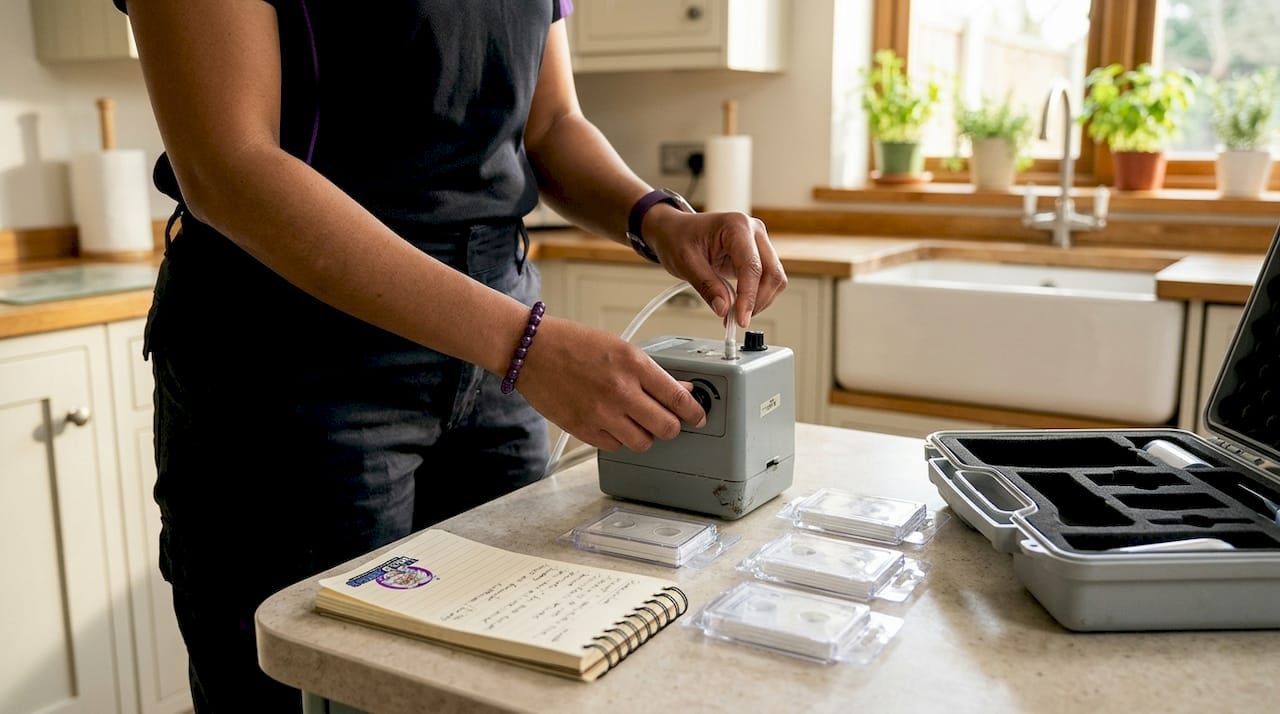
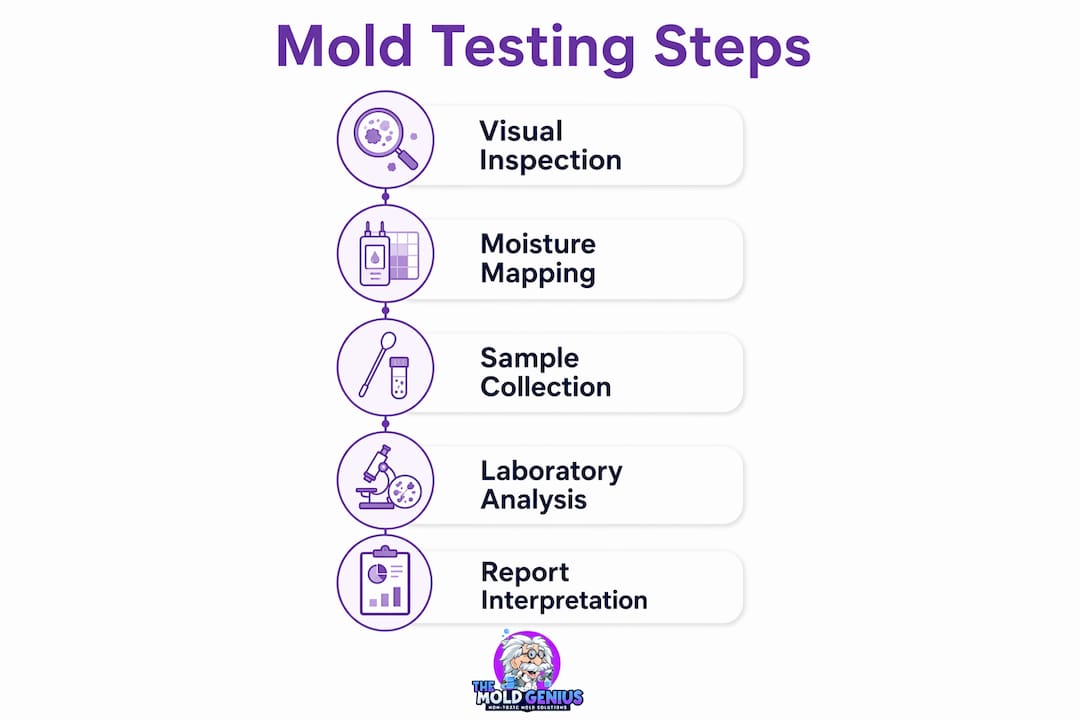
A pre-purchase mold evaluation is not simply swabbing a surface and sending it to a lab. The industry standard term is a mold assessment, and it follows a deliberate sequence before any samples are collected.
The standard mold assessment process:
- Property history review. The assessor asks about past water intrusions, roof leaks, plumbing failures, and any prior remediation. A home with a history of flooding in the Chicago suburbs is a different risk profile than one with none.
- Visual inspection of moisture-prone zones. Basements, crawlspaces, attics, bathrooms, and kitchens receive the closest scrutiny. These are the areas where moisture-prone zones consistently show the earliest signs of fungal amplification.
- Moisture mapping. Pin-type and non-invasive moisture meters measure wood and drywall moisture content. According to IICRC S520 guidance, moisture content above 16 to 19% is considered conducive to fungal growth. This step identifies problem areas that look dry to the naked eye.
- Selective sampling. Air sampling and surface sampling are used only when confirmation or quantification is needed. Sampling is not required in every situation. When it is used, samples go to an accredited laboratory for analysis.
- Baseline outdoor sampling. Indoor spore counts mean nothing without context. Paired indoor and outdoor samples are collected so that elevated indoor levels can be measured against what is naturally present outside.
Pro Tip: Ask your assessor for the outdoor baseline sample report alongside the indoor results. Without it, elevated spore counts are nearly impossible to interpret accurately.
| Sample Type | What It Tells You |
|---|---|
| Air sampling | Confirms mold amplification indoors; does not pinpoint the source |
| Surface/swab sampling | Identifies mold species on a specific surface |
| Outdoor baseline | Provides the comparison point that makes indoor results meaningful |
| Moisture readings | Locates hidden wet areas before visible mold appears |
When is mold testing actually necessary?
Not every home purchase requires formal mold testing, and understanding the difference saves you time and money.
Visible mold plus a clear moisture source typically does not require testing. When an inspector can see active mold growth on a basement wall and trace it to a leaking pipe, the remediation path is already clear. Testing in that scenario adds cost without adding useful information.
Testing becomes the right call in these situations:
- Musty odor without visible mold. A persistent smell in a finished basement or behind drywall suggests hidden growth. Testing provides the documentation needed to act.
- Suspected growth inside walls or ceilings. Air sampling can confirm elevated spore counts even when the source is not yet visible.
- Real estate transaction documentation. When a seller disputes the presence of mold or a buyer needs written evidence to negotiate repairs, a formal mold testing report provides the defensible record that verbal inspection notes cannot.
- Older Chicagoland homes. Properties built before 1980 in areas like Oak Park, Evanston, or Bridgeport often have original plumbing, minimal vapor barriers, and decades of moisture exposure. The mold inspection checklist for buying an older home should always include moisture mapping and, in most cases, air sampling.
- Post-flood or water-damaged properties. Illinois basements flood. If the disclosure shows any water intrusion history, testing confirms whether remediation was thorough.
Pro Tip: Illinois does not require sellers to disclose mold specifically, but they must disclose known material defects. A mold assessment gives you independent verification rather than relying on seller disclosures alone.
How to schedule mold testing during your home buying process
Timing is everything. A mold assessment that comes back after your inspection contingency expires is useless for negotiation.
- Request mold testing within the first 3 to 5 days of your inspection contingency period. Early timing in the contingency window preserves your ability to act on results before contract deadlines close that door.
- Book the assessor the same day your offer is accepted. Reputable mold assessment services in Chicagoland book out quickly, especially in spring and summer when home sales peak. Waiting two days to schedule can cost you a week.
- Coordinate with your real estate agent and general home inspector. Many buyers run the general inspection and mold assessment on the same day to minimize disruption to the seller and reduce the number of access requests.
- Allow 24 to 72 hours for lab results. Standard laboratory turnaround for air and surface samples is typically 24 to 72 hours. Rush processing is available but adds cost. Factor this into your contingency timeline before you negotiate the window length.
- Budget accordingly. A professional home mold inspection in the Chicago metro area typically runs between $300 and $600 depending on property size and number of samples. That cost is negligible compared to a $5,000 to $20,000 remediation surprise after closing.
Pro Tip: When negotiating your inspection contingency period, ask for 10 to 14 days rather than the standard 7. The extra time gives lab results room to come back without rushing your decision.
How to interpret mold testing results and decide next steps
Raw numbers on a lab report are not self-explanatory. A professional assessor translates them into a course of action.
The core principle: indoor spore counts must always be compared to outdoor baseline levels. Without an outdoor baseline, elevated indoor counts could simply reflect a high-spore day outside rather than an active indoor problem. This is why mold testing is mainly a confirmatory tool that follows thorough visual and moisture investigation, not a replacement for it.
When you receive your report, focus on these factors:
- Indoor-to-outdoor spore ratio. Indoor counts significantly higher than outdoor counts, especially for species like Stachybotrys or Chaetomium, indicate active indoor amplification.
- Moisture data alongside sample data. A room with elevated spore counts and a moisture reading above 18% in the adjacent wall is a confirmed problem. A room with elevated counts but normal moisture readings may indicate a different explanation.
- Contamination boundaries. A quality report identifies which rooms or zones are affected, which helps scope any necessary remediation and supports negotiation.
- Species identification. Not all mold is equally concerning. Cladosporium is common and often manageable. Stachybotrys chartarum (commonly called black mold) signals chronic moisture and warrants more aggressive action.
| Result Scenario | Recommended Next Step |
|---|---|
| Indoor counts near outdoor baseline | No remediation needed; monitor moisture sources |
| Indoor counts elevated, moisture confirmed | Negotiate remediation credit or seller repair before closing |
| Elevated counts, no moisture source found | Deeper investigation required; consider invasive inspection |
| Visible mold confirmed by sampling | Scope remediation with a qualified contractor before closing |
Use the report to negotiate. A documented mold problem gives you three options: ask the seller to remediate before closing, request a price reduction to cover remediation costs, or walk away if the scope is too large.
Common mold testing mistakes homebuyers make
The most expensive mistakes in a home mold inspection happen before a single sample is collected.
- Relying on DIY test kits. Over-the-counter mold test kits sold at hardware stores detect the presence of mold spores, which are present in virtually every building on earth. They cannot tell you whether levels are elevated, where the source is, or whether a problem is active. The Minnesota Department of Health warns that poor testing or poor sequencing wastes money and misleads consumers.
- Skipping moisture investigation. Testing without moisture mapping is like diagnosing a fever without checking for infection. Moisture investigation is the primary tool for locating mold sources. Testing alone cannot tell you where the water is coming from.
- Hiring a firm that does both testing and remediation. A company that profits from finding a problem and then fixing it has a financial incentive to find problems. Use an independent assessor for testing and a separate contractor for remediation.
- Accepting results without chain-of-custody documentation. Lab accreditation and chain-of-custody protocols are what make results defensible in a real estate dispute. Ask for documentation before you accept any report.
Pro Tip: Request that your assessor provide the laboratory’s accreditation certificate along with your results. Accredited labs follow standardized protocols that hold up if the results are ever challenged by a seller or their attorney.
“The goal of a mold investigation is not to collect samples. The goal is to find where mold is growing and why moisture is present.” This distinction separates a useful assessment from an expensive piece of paper.
Key takeaways
Mold testing before home purchase is most effective when it follows moisture mapping and visual inspection, uses accredited lab analysis, and is scheduled early enough in the contingency period to support negotiation.
| Point | Details |
|---|---|
| Moisture mapping comes first | Identify wet areas with meters before collecting any air or surface samples. |
| Test when mold is hidden or disputed | Formal sampling is most valuable when odor exists, growth is suspected inside walls, or documentation is needed. |
| Schedule within the first 3 to 5 days | Early testing preserves negotiation leverage before inspection contingency deadlines expire. |
| Always compare indoor to outdoor samples | Indoor spore counts without an outdoor baseline are nearly uninterpretable. |
| Use results to negotiate | A documented mold problem supports requests for remediation credits, seller repairs, or price reductions. |
What 25 years of Chicagoland mold work has taught me about pre-purchase testing
I have walked through hundreds of homes in the Chicago metro area where a buyer was on the fence about whether to test. My honest position: the question is rarely whether to test. It is whether you have done the moisture investigation first.
The buyers who get the most value from mold testing are the ones who come in with a clear picture of the property’s moisture history. They have already looked at the basement walls, checked the attic for staining, and asked about the HVAC system’s age. Testing then confirms what the moisture data suggests. That combination is powerful in a negotiation.
Where I see buyers waste money is when they order testing as a substitute for inspection. They get a report back, the numbers look fine, and they feel reassured. But if no one ran a moisture meter along the basement rim joists or checked the crawlspace vapor barrier, that clean report is incomplete. Chicagoland homes, especially those built between 1940 and 1980 in neighborhoods like Berwyn, Cicero, or the North Shore suburbs, carry decades of moisture exposure in their bones. A single air sample does not capture that history.
My advice: treat testing as the final confirmation step, not the first one. Find a qualified assessor who leads with moisture investigation and uses testing to confirm what the physical evidence already suggests. That approach gives you a report you can actually use.
— Jim
Get a mold assessment before you close
If you are buying a home in Chicagoland and want a mold assessment you can trust, Themoldgenius offers free estimates and works directly with buyers and their real estate agents to fit within inspection contingency timelines. Their three-phase process covers moisture detection and thermal imaging first, so testing is targeted and results are meaningful. When remediation is needed, their mold removal services use Pure Cloud Technology, a dry fogging system that reaches behind walls and above insulation without gutting rooms. Most jobs wrap up in a single day. Themoldgenius also works with major insurers including Allstate, State Farm, and USAA, and has a dedicated realtor network program for agents who need issues resolved before closing.
FAQ
What is the difference between a mold inspection and mold testing?
A mold inspection is a visual and moisture-based assessment of a property to identify signs of fungal growth and water intrusion. Mold testing refers specifically to collecting air or surface samples for laboratory analysis, which is a confirmatory step that typically follows the inspection.
Does every home purchase need a mold test?
Not always. When visible mold and a clear moisture source are already identified, remediation decisions are clear from inspection alone. Testing adds the most value when mold is suspected but not visible, or when documentation is needed for negotiation.
How long does it take to get mold test results?
Standard laboratory turnaround for air and surface samples is 24 to 72 hours. Rush processing is available for an additional fee. Schedule testing within the first few days of your inspection contingency to allow time for results before contract deadlines.
Can I use a DIY mold test kit instead of hiring a professional?
DIY kits detect the presence of spores, which exist in virtually every home, but cannot determine whether levels are elevated or where the source is located. The Minnesota Department of Health notes that poor testing without professional context wastes money and can mislead buyers into false confidence or unnecessary alarm.
How do mold test results affect a home purchase negotiation?
A formal mold assessment report with documented elevated spore counts and identified moisture sources gives buyers concrete grounds to request seller repairs, a remediation credit, or a price reduction. Without that documentation, mold concerns remain subjective and are harder to negotiate around.