
What is a mold spore, exactly?
Mold spores are the microscopic reproductive cells that fungi produce to spread and multiply. Think of them like seeds, except far smaller and far more mobile. The EPA notes that spores range from 2–100 microns in diameter, which means you could never spot one with the naked eye no matter how hard you looked.
They are everywhere. Outdoors, indoors, floating through your living room right now. That is not an exaggeration. Mold spores are present in all indoor and outdoor environments, and their counts in the air shift from season to season, day to day, and even hour to hour. The only thing standing between dormant spores and an active mold colony in your home is moisture.
Here is what you need to know upfront:
- Spores are invisible to the naked eye and microscopic in size
- They float through air and travel long distances on the gentlest air currents
- They also hitch rides on clothing, shoes, bags, and pets
- Spores remain dormant and harmless until they land on a wet or damp surface
- Once moisture is present, spores can germinate and begin digesting whatever they land on
- No indoor environment can be completely free of mold spores
The practical takeaway: you cannot eliminate spores from your home. What you can control is whether they ever find the moisture they need to grow.
What do mold spores look like, and how do they reproduce?
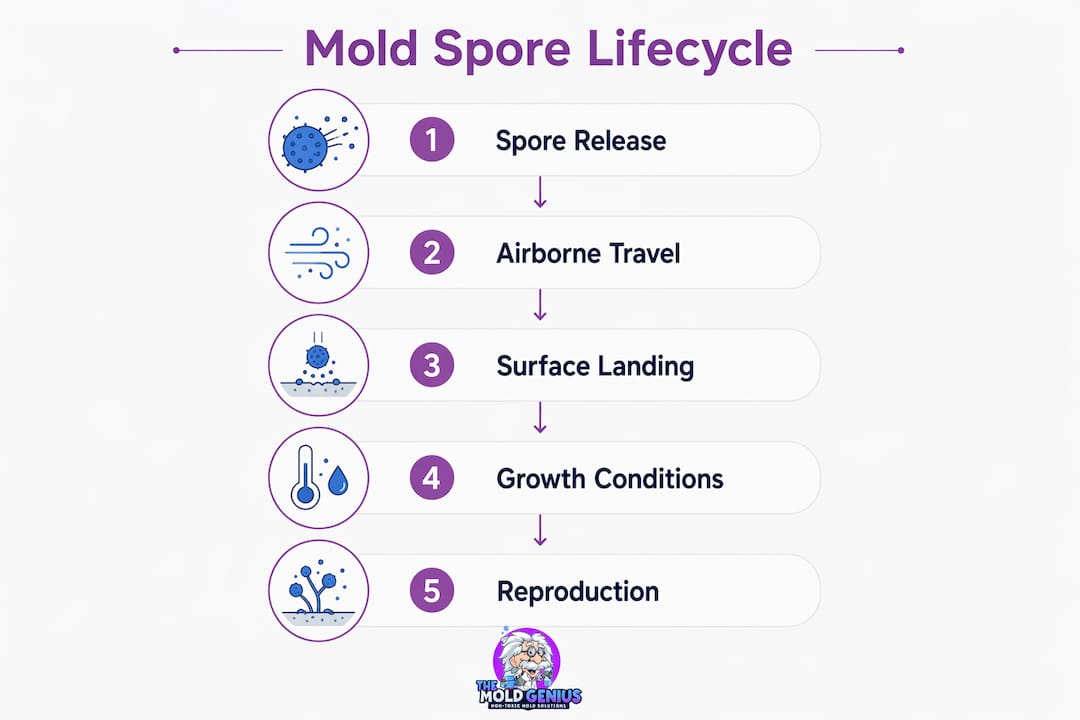
Mold belongs to the kingdom Fungi, not the plant or animal kingdoms. It reproduces by releasing spores into the air, the same way a dandelion releases seeds, but on a scale that makes dandelions look lazy. A single mold colony can release millions of spores.

Under a microscope, spores vary considerably in shape and color depending on the species. Some are round, some oval, some look like tiny chains. Their color ranges from white and gray to green, black, and brown. On surfaces, you do not see individual spores. What you see is the colony they have built.
Common mold types found in U.S. homes include:
- Cladosporium — olive green to black, often found on fabrics and wood surfaces
- Penicillium — blue-green, frequently appears on water-damaged walls and insulation
- Aspergillus — can be white, yellow, green, or black; common in damp areas
- Stachybotrys chartarum — the infamous “black mold,” dark greenish-black, associated with chronic water damage
What spores need to germinate:
- A damp or wet surface
- Organic material to feed on (wood, drywall, paper, fabric)
- Warmth, though some molds tolerate cooler temperatures
Surfaces that commonly support mold growth:
- Drywall and ceiling tiles
- Wood framing and structural lumber
- Carpet, upholstery, and fabric
- Paper products, cardboard, and insulation
One detail worth knowing: spores can stay viable for years after they are produced. Even dead spores can still trigger allergic reactions because their allergens remain potent long after the spore itself is no longer alive.
How mold spores spread and grow inside your home
Spores travel by air. That is their primary dispersal method, and they are extraordinarily good at it. Mold spores waft through indoor and outdoor air continuously, and some species produce spores that are easily disturbed and resettle with every movement or breeze. Others have sticky spores that cling to surfaces until brushed off by direct contact.
Once spores land on a damp surface indoors, the clock starts. They begin germinating, sending out thread-like structures called hyphae that dig into the material and extract nutrients. The mold is literally eating your wall, your ceiling tile, or your carpet as it grows.
Conditions that accelerate indoor mold growth:
- Relative humidity above 60%
- Leaks from roofs, pipes, or windows that go unaddressed
- Flooding or water intrusion events
- Poor ventilation in bathrooms, kitchens, attics, and crawlspaces
- Condensation on cold surfaces like pipes and windows
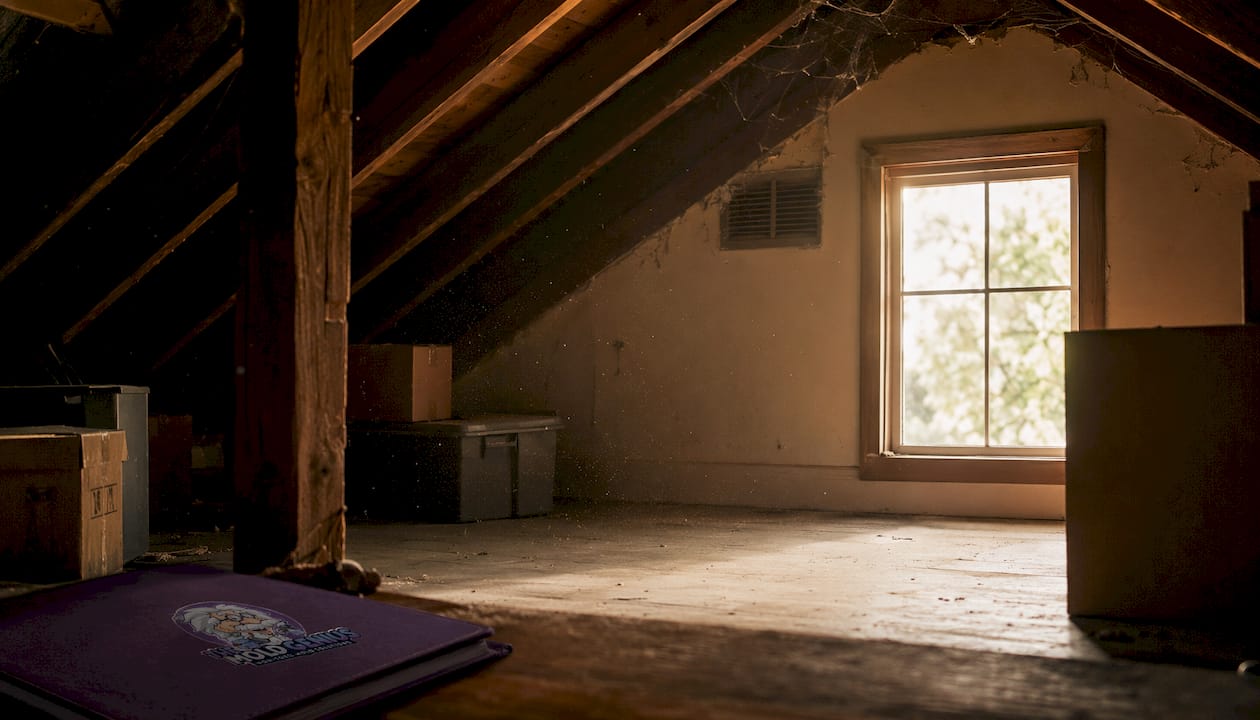
Attics deserve special mention. Temperature swings and inadequate ventilation create exactly the humid, stagnant conditions mold loves. Attic ventilation plays a direct role in whether spores in that space ever find conditions favorable enough to colonize. Basements and crawlspaces face similar risks from ground moisture and limited airflow.
Mold also enters your home through open doors, windows, vents, and HVAC systems. Spores circulating through mold in HVAC systems can distribute them to every room in the house with every heating or cooling cycle.
Are mold spores dangerous? Health effects you should know
The short answer: they can be, especially for certain people. Inhaling or touching mold spores can cause allergic reactions including sneezing, runny nose, red eyes, and skin rash. For people with asthma, exposure can trigger severe reactions. People with compromised immune systems or chronic lung disease face a higher risk of actual fungal infections.
That said, health responses vary widely from one person to the next. Someone with no allergies may feel nothing in a moldy space while their neighbor develops persistent respiratory symptoms. The CDC is direct on this point: health effects vary so much between individuals that air sampling alone cannot reliably predict whether a specific environment will make a specific person sick.
Common symptoms of mold spore exposure:
- Sneezing and runny nose
- Coughing or wheezing
- Red, itchy, or watering eyes
- Skin rash or irritation
- Worsening asthma symptoms
- Sore throat
Who faces the greatest risk:
- People with mold allergies
- Individuals with asthma
- Immune-compromised people (those undergoing chemotherapy, organ transplant recipients, etc.)
- People with chronic lung conditions
On mycotoxins: some molds do produce these potentially toxic compounds, but the main indoor health concern is allergic and irritant reactions, not toxin exposure. Serious mycotoxin-related illness occurs primarily in certain occupational settings, not typical residential ones.
“Dampness, rather than mold alone, leads to health risks by supporting mold, microbes, volatile organic compounds, and allergens. Fixing moisture problems is the most effective preventative step.” — CDC/NIOSH
That framing matters. The problem is not just the mold you can see; damp buildings create a whole ecosystem of irritants, and the mold is one piece of it.
How to detect mold spores and signs of mold growth at home
You cannot see individual mold spores. They are microscopic, and no amount of squinting at your bathroom ceiling will reveal them. What you can detect are the signs that a colony has already formed, which means spores have been landing and germinating long enough to build visible growth.
Visible and sensory signs of mold:
- A persistent musty or earthy odor, especially in basements, bathrooms, or after rain
- Discoloration on walls, ceilings, or floors (black, green, gray, or white spots)
- Peeling or bubbling paint, which often signals moisture behind the surface
- Warped or stained drywall
- Visible fuzzy or powdery growth on any surface
Where to look first:
- Under sinks and around plumbing fixtures
- Bathroom grout, caulk, and ceiling tiles
- Basement walls and floor joints
- Attic sheathing and rafters
- Behind washing machines and refrigerators
- Around windows with condensation
Start with your nose. A musty smell in a room with no visible mold usually means the growth is hidden behind a wall, under flooring, or above a ceiling. Moisture is always the trail to follow. Find the source of water intrusion and you will find the mold.
Pro Tip: Before calling anyone, grab a flashlight and check the areas around any past or current leaks. Mold within 24–48 hours of water exposure is not always visible yet, but discoloration and soft spots in drywall are early tells.
Professional mold testing sounds appealing, but the EPA and CDC both note that mold testing is expensive and inconclusive for predicting health risk. There are no federal standards for acceptable mold levels in homes, so a test result rarely tells you what to do next. A thorough visual inspection combined with moisture source identification is almost always the more useful first step.
Expert insights on mold spore exposure and effective remediation
Here is the most important thing professionals know that most homeowners do not: you cannot win by chasing spores. Complete elimination of mold spores from indoor air is not feasible. They will always be present. The goal is to deny them what they need to grow.
That shifts the entire strategy. Effective remediation is not just about killing or removing visible mold. It is about fixing the moisture source that allowed the colony to form in the first place. If you clean up the mold but leave the leak, the humidity problem, or the condensation issue untouched, the mold returns. Every time.
“Killing visible mold is not enough. Mold allergens and mycotoxins can remain even after mold death, so physical removal and moisture correction are both required for lasting remediation.” — EPA
This is exactly why mold remediation differs from simple mold removal. Removal addresses what you can see. Remediation addresses the conditions that created it.
Themoldgenius approaches this in three phases: diagnosis using moisture detection and thermal imaging to find hidden growth, removal using their Pure Cloud Technology dry fogging system with hospital-grade hydrogen peroxide and silver ions, and prevention by correcting the root moisture cause. Their system reaches behind walls, above insulation, and into tight corners where traditional methods cannot. Most jobs wrap up in a single day, and homeowners return the same day.
Pro Tip: Always repair the moisture source before any remediation work begins. Treating mold in a space that is still actively getting wet is like bailing out a boat without plugging the hole.
For homeowners dealing with visible mold growth or persistent musty odors, Themoldgenius offers free estimates and works with major insurers including Allstate, State Farm, USAA, Farmers, and Liberty Mutual. Their mold removal and remediation services cover attics, basements, bathrooms, crawlspaces, and garages across the Chicagoland area.

Key Takeaways
Mold spores are microscopic, airborne reproductive cells that cannot be eliminated from any indoor environment, making moisture control the only reliable defense against active mold growth.
| Point | Details |
|---|---|
| Spore size and visibility | Spores range from 2–100 microns and are invisible to the naked eye. |
| Moisture is the trigger | Spores remain dormant and harmless until they land on a wet or damp surface. |
| Health effects vary widely | Symptoms range from sneezing and eye irritation to worsened asthma; responses differ significantly between individuals. |
| Testing has real limits | Professional mold testing is expensive and cannot reliably predict health risk for a specific person. |
| Remediation requires moisture repair | Removing mold without fixing the moisture source means the problem will return. |