
Mold toxicity refers to health effects caused by mycotoxins produced by certain molds, but the CDC and EPA primarily classify most indoor mold health risks as allergic reactions and irritant effects rather than true toxicity. This distinction matters because true toxic effects from indoor mold occur mainly through ingestion, not typical inhalation, leading the medically recognized term for mold-related illness to be 'mold-associated illness,' which encompasses allergic, irritant, and rare toxic effects. Common symptoms of mold exposure include nasal congestion, coughing, itchy eyes, skin irritation, and aggravated asthma.
Mold toxicity is defined as the set of health effects caused when certain molds produce harmful compounds called mycotoxins, but the CDC and EPA classify most indoor mold health risks as allergic reactions and irritant effects rather than true toxicity. That distinction matters because millions of people worry they have been “poisoned” by mold when their symptoms actually stem from a well-understood immune response. The good news is that both allergic and toxic effects share the same solution: remove the mold and fix the moisture source driving it. Understanding what mold actually does to the body helps you respond without panic and without delay.
What is mold toxicity, and how does it differ from mold allergies?
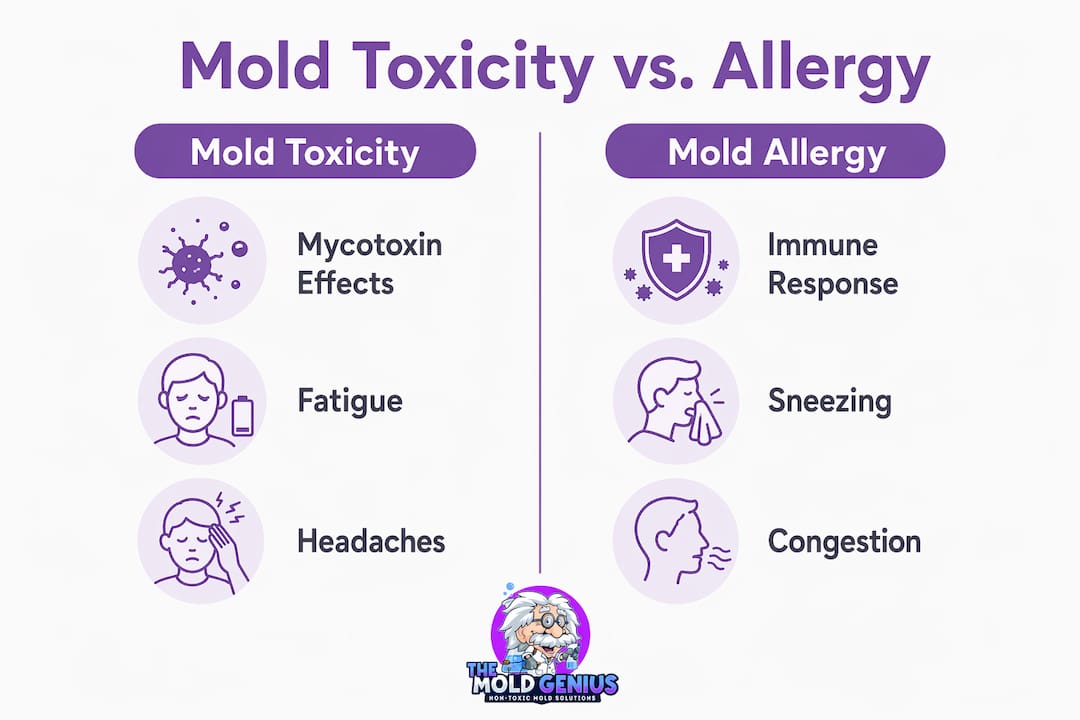
Mold toxicity and mold allergy are not the same condition. Mold is not inherently poisonous; only certain species produce mycotoxins, and even then, the health risk depends heavily on the dose and route of exposure. The EPA and CDC group mold health risks into four categories: allergic reactions, irritant effects, rare infections (mostly in people with weakened immune systems), and toxic effects that occur mainly through ingestion rather than inhalation.
Mycotoxins are real and well-studied in food safety. Aflatoxin in peanuts and ochratoxin in grain are established hazards. Translating that food-based risk to indoor air is where the science gets complicated. Toxic doses indoors are rarely achieved under typical residential conditions, which means the dramatic “toxic mold” framing you see online overstates the inhalation risk for most households.

The term “mold toxicity” has become a catch-all phrase in popular culture. The medically recognized term for mold-related illness is “mold-associated illness,” which covers allergic, irritant, and in rare cases, toxic effects. Using the correct framing helps you ask better questions when you talk to a doctor and helps you avoid clinics selling unproven treatments.
What are the symptoms of mold exposure?
Mold exposure symptoms range from mild to serious, and they vary based on how sensitive you are, how long you have been exposed, and whether you have an underlying respiratory condition.
The most common symptoms are:
- Nasal congestion and runny nose — your immune system reacts to mold spores the same way it reacts to pollen
- Coughing and wheezing — airway inflammation is a direct irritant response, not always an allergy
- Itchy, watery, or red eyes — mucous membranes are especially sensitive to airborne particles
- Skin irritation or rash — direct contact with mold or its spores can trigger contact dermatitis
- Aggravated asthma — mold worsens asthma and can trigger attacks in people who already have the condition
Less commonly, people report fatigue, difficulty concentrating, and headaches after prolonged mold exposure. These symptoms are real and worth taking seriously, but the causal link between indoor mold and systemic effects like brain fog is not as well established as the respiratory evidence. Hypersensitivity pneumonitis is a more serious condition tied to heavy mold exposure. It causes lung inflammation and can become chronic if the exposure continues.
Pro Tip: Keep a symptom diary that notes when symptoms appear, where you were, and whether they improve when you leave the building. That pattern is the most useful clinical data your doctor can have.
Immunocompromised people face a higher risk of mold-related infections, particularly from species like Aspergillus. For healthy adults, infection from indoor mold is uncommon. The risk profile is not the same for everyone in the household, which is why children, the elderly, and anyone on immunosuppressive medication deserve extra attention when mold is found.
Are “toxic mold illness” and CIRS real diagnoses?
The short answer is: proceed with caution. Chronic Inflammatory Response Syndrome (CIRS) linked to mold is not a widely accepted medical diagnosis according to UCLA Health clinicians. That does not mean your symptoms are imaginary. It means the diagnostic framework promoted by some online clinics lacks the scientific consensus required for mainstream medical recognition.
“Most multi-organ systemic toxicity claims from residential mold lack rigorous scientific backing. Respiratory symptoms are well documented, but the leap to chronic systemic illness requires evidence that current research has not consistently provided.” — UCLA Health clinicians
The distinction between foodborne mycotoxin illness and inhalation risk is critical here. Eating grain contaminated with aflatoxin at high levels causes documented liver damage. Breathing air in a water-damaged home exposes you to far lower concentrations, and inhalation risk in homes is typically low because the environmental conditions needed for toxic levels are rarely met indoors.
Pro Tip: If a clinic offers urine mycotoxin testing as a diagnostic tool for chronic illness, ask for peer-reviewed evidence supporting that test’s clinical validity. Board-certified environmental or occupational medicine physicians are the right specialists to consult for mold-related symptoms.
Alarmist content about chronic mold illness is widespread online and not supported by mainstream medical science. That does not mean you should dismiss your symptoms. It means you should get a proper evaluation from a qualified physician rather than self-diagnosing from a website selling supplements or unproven detox protocols.
How to test for mold and diagnose mold-related illness
Environmental mold testing is rarely the right first step. Species identification of mold is not necessary to address health risks because the remediation approach is the same regardless of which species is present. Spending money on air sampling before you have addressed visible mold delays the one action that actually reduces your exposure.
Here is what actually helps when you suspect mold is affecting your health:
- Track your symptoms against your location. Do symptoms improve on weekends away from home? That pattern is clinically meaningful.
- Look for visible mold or water damage. Musty odors and staining are reliable indicators that mold is present, even if you cannot see it directly.
- Consult a board-certified physician. Allergists, pulmonologists, and occupational medicine specialists are the right professionals for mold-related health concerns.
- Avoid urine mycotoxin panels from non-mainstream labs. Standardized diagnostic tests for mold-related illness do not currently exist; symptom tracking and exposure history remain the most practical diagnostic tools.
- Request an IgE allergy panel if allergic symptoms dominate. Skin prick tests or blood tests for mold-specific IgE antibodies are established, evidence-based tools for diagnosing mold allergy.
There are no federal regulatory limits for airborne mold concentrations. That absence of a standard is itself informative: if you see or smell mold, the answer is removal, not measurement. Air testing after remediation can confirm that a job was done correctly, but it is not a useful starting point for health risk assessment.
How to remove mold and prevent it from coming back
Visible or smelled mold always requires action, regardless of species or test results. Addressing moisture sources is the foundation of effective remediation. Cleaning mold without fixing the leak, condensation problem, or ventilation failure that caused it guarantees the mold returns within weeks.
Professional remediation follows a clear sequence:
- Identify the moisture source. Thermal imaging and moisture meters locate hidden water intrusion behind walls and above ceilings. Fixing a plumbing leak early prevents the conditions mold needs to grow.
- Contain the affected area. Negative air pressure and physical barriers prevent spores from spreading to clean areas during removal.
- Remove contaminated materials. Porous materials like drywall and insulation that are heavily colonized must be removed, not just cleaned.
- Treat remaining surfaces. Antimicrobial treatments address residual spores on structural surfaces.
- Verify the work. Post-remediation testing confirms spore counts have returned to normal levels before the space is reoccupied.
Remediation costs vary widely based on the extent of contamination, the materials affected, and the structural repairs needed to fix the moisture source. A bathroom with surface mold costs far less to address than a basement with water-damaged framing. Getting a professional assessment before work begins gives you an accurate scope and prevents surprises.
Homeowners can reduce mold risk significantly with consistent habits. Keep indoor humidity below 60% using a dehumidifier or air conditioning. Fix any leak within 24–48 hours of discovery, because mold can begin growing on wet materials within that window. Improve bathroom and kitchen ventilation with exhaust fans vented to the outside. Check the mold growth conditions in your home regularly, especially in basements, crawlspaces, and attics where moisture accumulates without obvious signs.
Pro Tip: Running an air purifier without fixing the moisture source is ineffective. The mold will keep producing spores faster than any filter can remove them. Fix the source first.
Understanding the difference between mold removal and remediation helps you evaluate contractor proposals accurately. Removal addresses the visible growth. Remediation addresses the conditions that allowed it to grow. You need both.
Key Takeaways
Mold toxicity is a specific subset of mold-related illness caused by mycotoxins, but most indoor mold health risks are allergic and irritant effects that resolve when mold is removed and moisture is controlled.
| Point | Details |
|---|---|
| Mold toxicity vs. mold allergy | Most indoor mold health risks are allergic or irritant reactions, not true mycotoxin poisoning. |
| CIRS is not mainstream medicine | UCLA Health clinicians state CIRS is not a widely accepted diagnosis; consult board-certified specialists. |
| Skip species testing | Mold species identification does not change the remediation approach and delays necessary action. |
| Moisture control is non-negotiable | Removing mold without fixing the moisture source guarantees it returns within weeks. |
| Symptom tracking beats air testing | Noting when symptoms improve away from home gives physicians the most useful diagnostic information. |
What 25 years in mold remediation taught me about fear and facts
People who call us are often convinced they have been poisoned. They have spent hours reading forums and watching videos that describe mold as a silent killer lurking in every wall. I understand why. The symptoms are real, the fear is real, and the internet rewards alarming content. But after 25 years of combined experience and hundreds of jobs across Chicagoland, I can tell you that the most dangerous thing about mold is not the mycotoxins. It is the delay.
The homeowners who suffer the most are not the ones with the worst mold. They are the ones who spent months researching online, ordering urine tests from non-mainstream labs, and consulting clinics that charged thousands of dollars for unproven protocols. Meanwhile, the mold kept growing. The moisture source kept feeding it. Their symptoms kept getting worse.
The science is clear on one thing: get the mold out and fix what caused it. Everything else is secondary. I have seen people’s respiratory symptoms resolve within weeks of a proper remediation. I have also seen symptoms persist in people who cleaned the surface mold but left a slow roof leak untreated. The mold always wins when the moisture stays.
My honest advice is this: if you see mold, smell mold, or have symptoms that improve when you leave your home, get a professional assessment. Not an air test. Not a urine panel. A real inspection by someone who will find the moisture source and tell you what it takes to fix it. That is the step that actually changes your health outcome.
— Jim
Themoldgenius: professional mold removal for Chicagoland homeowners
Mold exposure symptoms deserve a real solution, not just information.

Themoldgenius serves the Chicagoland area with 25+ years of combined experience in professional mold removal and remediation. Their three-phase process covers diagnosis with thermal imaging and moisture detection, removal using Pure Cloud Technology (a dry fogging system with hospital-grade hydrogen peroxide and silver ions), and prevention by addressing the root moisture cause. Most jobs wrap up in a single day, and homeowners return the same day. Free estimates are available, and Themoldgenius works directly with major insurers including Allstate, State Farm, and USAA to simplify the claims process.
FAQ
What is mold toxicity, exactly?
Mold toxicity refers to health effects caused by mycotoxins produced by certain mold species. Most indoor mold health risks are actually allergic or irritant reactions, not true toxicity.
Is all mold in the home harmful?
All indoor mold warrants removal, but not all mold produces mycotoxins. The health risk from indoor mold is primarily allergic and irritant in nature for most healthy adults.
Do I need to test for mold species before remediation?
No. Species identification does not change the remediation approach and delays necessary action. If you see or smell mold, removal and moisture control are the correct next steps.
What causes mold toxicity symptoms to persist after remediation?
Symptoms persist when the moisture source is not fixed alongside mold removal. Mold returns when water intrusion or humidity problems remain unresolved, continuing exposure and symptoms.
When should I see a doctor for mold exposure?
See a doctor if respiratory symptoms, persistent coughing, or eye irritation correlate with time spent in a specific building. Allergists, pulmonologists, and occupational medicine physicians are the appropriate specialists for mold-related health concerns.